„Kann nicht neutralisiert werden"
Judge Level 1Counterspell auf Abrupt Decay: Darf man das überhaupt zielen — und was passiert dann?
Beteiligte Karten
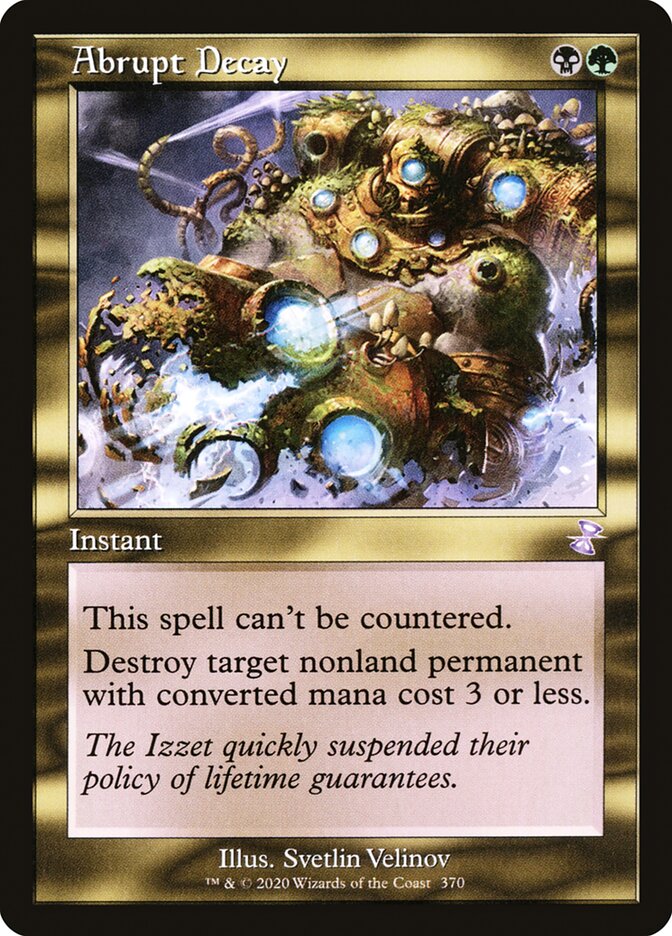

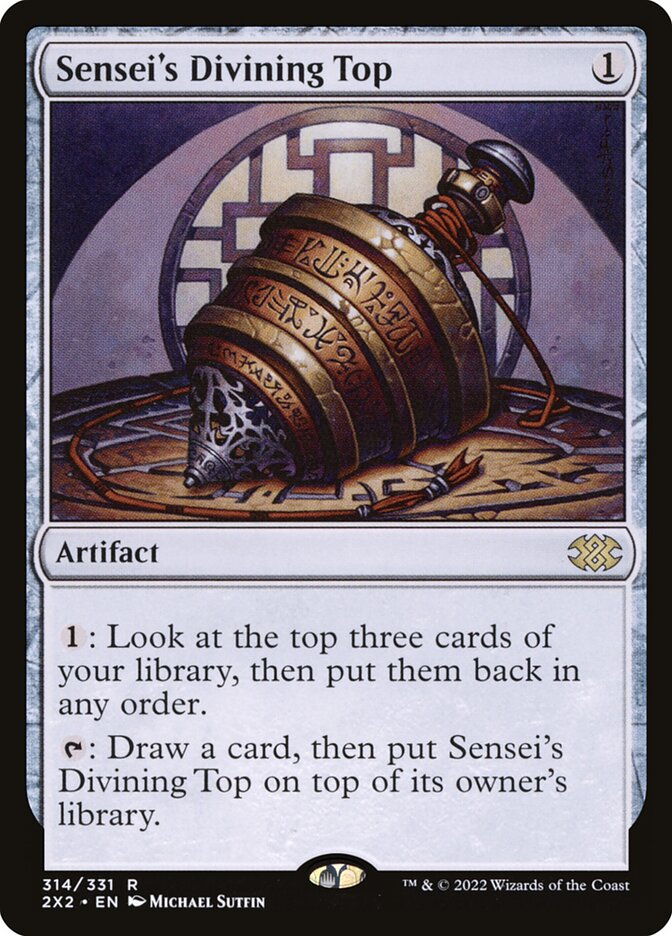
Abrupt Decay auf den Kreisel
Dein Gegner kontrolliert Sensei's Divining Top. Du wirkst Abrupt Decay darauf — auf der Karte steht: „Dieser Zauberspruch kann nicht neutralisiert werden."
601.2To cast a spell is to take it from where it is (usually the hand), put it on the stack, and pay its costs, so that it will eventually resolve and have its effect. Casting a spell includes proposal of the spell (rules 601.2a–d) and determination and payment of costs (rules 601.2f–h). To cast a spell, a player follows the steps listed below, in order. A player must be legally allowed to cast the spell to begin this process (see rule 601.3). If a player is unable to comply with the requirements of a step listed below while performing that step, the casting of the spell is illegal; the game returns to the moment before the casting of that spell was proposed (see rule 733, “Handling Illegal Actions”).
Was passiert?
Der Gegner hält Counterspell.
Darf er damit auf Abrupt Decay zielen?
Wähle eine Antwort — dann geht es weiter.
„Kann nicht neutralisiert werden" macht den Spruch nicht unzielbar — es sorgt nur dafür, dass der Neutralisier-Teil beim Verrechnen ins Leere läuft. Zielwahl (beim Wirken) und Effekt (beim Verrechnen) sind zwei getrennte Prüfungen.
601.2cThe player announces their choice of an appropriate object or player for each target the spell requires. A spell may require some targets only if an alternative or additional cost (such as a kicker cost) or a particular mode was chosen for it; otherwise, the spell is cast as though it did not require those targets. Similarly, a spell may require alternative targets only if an alternative or additional cost was chosen for it. If the spell has a variable number of targets, the player announces how many targets they will choose before they announce those targets. In some cases, the number of targets will be defined by the spell’s text. Once the number of targets the spell has is determined, that number doesn’t change, even if the information used to determine the number of targets does. The same target can’t be chosen multiple times for any one instance of the word “target” on the spell. However, if the spell uses the word “target” in multiple places, the same object or player can be chosen once for each instance of the word “target” (as long as it fits the targeting criteria). If any effects say that an object or player must be chosen as a target, the player chooses targets so that they obey the maximum possible number of such effects without violating any rules or effects that say that an object or player can’t be chosen as a target. The chosen objects and/or players each become a target of that spell. (Any abilities that trigger when those objects and/or players become the target of a spell trigger at this point; they’ll wait to be put on the stack until the spell has finished being cast.)
Der Gegner neutralisiert trotzdem
Counterspell geht auf den Stack, Ziel: Abrupt Decay. Das ist legal — auch wenn es ihm nichts bringen wird.
Counterspell verrechnet sich — und nichts passiert
Counterspell versucht, Abrupt Decay zu neutralisieren. Dieser Teil wird nicht ausgeführt. Counterspell geht in den Friedhof, Abrupt Decay bleibt liegen.
608.1Each time all players pass in succession, the spell or ability on top of the stack resolves. (See rule 609, “Effects.”)
701.6aTo counter a spell or ability means to cancel it, removing it from the stack. It doesn’t resolve and none of its effects occur. A countered spell is put into its owner’s graveyard.
Decay räumt ab
Abrupt Decay verrechnet sich und zerstört den Kreisel.
Stack
Abrupt Decay
Kann nicht neutralisiert werden; zerstört das Ziel

Counterspell
Ziel: Abrupt Decay
Sensei's Divining Top
Artefakt deines Gegners
Der Stack ist leer.
Schlachtfeld
—
Kurz beantwortet
Darf man einen Zauberspruch, der nicht neutralisiert werden kann, mit Counterspell als Ziel wählen?
Lösung anzeigen Lösung ausblenden
„Kann nicht neutralisiert werden" macht den Spruch nicht unzielbar — es sorgt nur dafür, dass der Neutralisier-Teil beim Verrechnen ins Leere läuft. Zielwahl (beim Wirken) und Effekt (beim Verrechnen) sind zwei getrennte Prüfungen.
601.2To cast a spell is to take it from where it is (usually the hand), put it on the stack, and pay its costs, so that it will eventually resolve and have its effect. Casting a spell includes proposal of the spell (rules 601.2a–d) and determination and payment of costs (rules 601.2f–h). To cast a spell, a player follows the steps listed below, in order. A player must be legally allowed to cast the spell to begin this process (see rule 601.3). If a player is unable to comply with the requirements of a step listed below while performing that step, the casting of the spell is illegal; the game returns to the moment before the casting of that spell was proposed (see rule 733, “Handling Illegal Actions”).
601.2cThe player announces their choice of an appropriate object or player for each target the spell requires. A spell may require some targets only if an alternative or additional cost (such as a kicker cost) or a particular mode was chosen for it; otherwise, the spell is cast as though it did not require those targets. Similarly, a spell may require alternative targets only if an alternative or additional cost was chosen for it. If the spell has a variable number of targets, the player announces how many targets they will choose before they announce those targets. In some cases, the number of targets will be defined by the spell’s text. Once the number of targets the spell has is determined, that number doesn’t change, even if the information used to determine the number of targets does. The same target can’t be chosen multiple times for any one instance of the word “target” on the spell. However, if the spell uses the word “target” in multiple places, the same object or player can be chosen once for each instance of the word “target” (as long as it fits the targeting criteria). If any effects say that an object or player must be chosen as a target, the player chooses targets so that they obey the maximum possible number of such effects without violating any rules or effects that say that an object or player can’t be chosen as a target. The chosen objects and/or players each become a target of that spell. (Any abilities that trigger when those objects and/or players become the target of a spell trigger at this point; they’ll wait to be put on the stack until the spell has finished being cast.)
608.1Each time all players pass in succession, the spell or ability on top of the stack resolves. (See rule 609, “Effects.”)
701.6aTo counter a spell or ability means to cancel it, removing it from the stack. It doesn’t resolve and none of its effects occur. A countered spell is put into its owner’s graveyard.