Level 2 · Fähigkeiten
Beteiligte Karten

Aktivierte Fähigkeiten
Du hast Prodigal Sorcerer in dieser Hauptphase gewirkt, er liegt ungetappt im Spiel. Darfst du „ : Diese Kreatur fügt einem Ziel deiner Wahl 1 Schadenspunkt zu." noch in diesem Zug aktivieren?
Tasten A bis D oder Klick. Keine Zeitbegrenzung.
Die „Einsatzverzögerung" betrifft zwei Dinge: Angreifen und Fähigkeiten mit oder  in den Kosten. Beides geht erst, wenn du die Kreatur seit Beginn deines letzten Zugs durchgehend kontrolliert hast. Fähigkeiten ohne Tap-Symbol (etwa „
 : +1/+0") sind sofort nutzbar. Eile hebt beide Einschränkungen auf.
302.6A creature’s activated ability with the tap symbol or the untap symbol in its activation cost can’t be activated unless the creature has been under its controller’s control continuously since their most recent turn began. A creature can’t attack unless it has been under its controller’s control continuously since their most recent turn began. This rule is informally called the “summoning sickness” rule.
702.10cIf a creature has haste, its controller can activate its activated abilities whose cost includes the tap symbol or the untap symbol even if that creature hasn’t been controlled by that player continuously since their most recent turn began. (See rule 302.6.)
Beteiligte Karten

Aktivierte Fähigkeiten
Aussage
„Du aktivierst Prodigal Sorcerers Fähigkeit und wählst den Gegner als Ziel. Als Antwort tötet er den Sorcerer mit Lightning Bolt. Der Gegner bekommt den Schadenspunkt trotzdem. "
Wähle eine Antwort — dann geht es weiter.
Sobald eine Fähigkeit auf dem Stack liegt, existiert sie unabhängig von ihrer Quelle. Wird die Quelle danach zerstört, ändert das nichts: Die Fähigkeit verrechnet sich. Dass der Sorcerer „selbst" den Schaden zufügt, löst das Spiel über seine zuletzt bekannten Informationen. In der Regel scheitern nur Zauber und Fähigkeiten mit Zielen, nämlich wenn alle Ziele illegal werden. Der Gegner als Ziel ist weiterhin legal.
113.7aOnce activated or triggered, an ability exists on the stack independently of its source. Destruction or removal of the source after that time won’t affect the ability. Note that some abilities cause a source to do something (for example, “This creature deals 1 damage to any target”) rather than the ability doing anything directly. In these cases, any activated or triggered ability that references information about the source for use while announcing an activated ability or putting a triggered ability on the stack checks that information when the ability is put onto the stack. Otherwise, it will check that information when it resolves. In both instances, if the source is no longer in the zone it’s expected to be in at that time, its last known information is used. The source can still perform the action even though it no longer exists.
608.2bIf the spell or ability specifies targets, it checks whether the targets are still legal. A target that’s no longer in the zone it was in when it was targeted is illegal. Other changes to the game state may cause a target to no longer be legal; for example, its characteristics may have changed or an effect may have changed the text of the spell. If the source of an ability has left the zone it was in, its last known information is used during this process. If all its targets, for every instance of the word “target,” are now illegal, the spell or ability doesn’t resolve. It’s removed from the stack and, if it’s a spell, put into its owner’s graveyard. Otherwise, the spell or ability will resolve normally. Illegal targets, if any, won’t be affected by parts of a resolving spell’s effect for which they’re illegal. Other parts of the effect for which those targets are not illegal may still affect them. If the spell or ability creates any continuous effects that affect game rules (see rule 613.11), those effects don’t apply to illegal targets. If part of the effect requires information about an illegal target, it fails to determine any such information. Any part of the effect that requires that information won’t happen.
Beteiligte Karten

Aktivierte Fähigkeiten
Dein Gegner wirkt Lightning Bolt auf deinen Sakura-Tribe Elder. Als Antwort aktivierst du „Opfere diese Kreatur: Suche ein Standardland." Was passiert, wenn der Stack abgearbeitet wird?
Tasten A bis D oder Klick. Keine Zeitbegrenzung.
Kosten werden beim Aktivieren bezahlt, nicht beim Verrechnen. Der Elder geht sofort auf den Friedhof, die Fähigkeit liegt über dem Bolt auf dem Stack und verrechnet sich zuerst. Wenn Lightning Bolt dran ist, ist sein einziges Ziel weg: Er wird nicht verrechnet und geht auf den Friedhof. Das ist der Klassiker, warum Opfer-Fähigkeiten Removal „ins Leere laufen lassen".
602.2bThe remainder of the process for activating an ability is identical to the process for casting a spell listed in rules 601.2b–i. Those rules apply to activating an ability just as they apply to casting a spell. An activated ability’s analog to a spell’s mana cost (as referenced in rule 601.2f) is its activation cost.
601.2hThe player pays the total cost. First, they pay all costs that don’t involve random elements or moving objects from the library to a public zone, in any order. Then they pay all remaining costs in any order. Partial payments are not allowed. Unpayable costs can’t be paid.
608.2bIf the spell or ability specifies targets, it checks whether the targets are still legal. A target that’s no longer in the zone it was in when it was targeted is illegal. Other changes to the game state may cause a target to no longer be legal; for example, its characteristics may have changed or an effect may have changed the text of the spell. If the source of an ability has left the zone it was in, its last known information is used during this process. If all its targets, for every instance of the word “target,” are now illegal, the spell or ability doesn’t resolve. It’s removed from the stack and, if it’s a spell, put into its owner’s graveyard. Otherwise, the spell or ability will resolve normally. Illegal targets, if any, won’t be affected by parts of a resolving spell’s effect for which they’re illegal. Other parts of the effect for which those targets are not illegal may still affect them. If the spell or ability creates any continuous effects that affect game rules (see rule 613.11), those effects don’t apply to illegal targets. If part of the effect requires information about an illegal target, it fails to determine any such information. Any part of the effect that requires that information won’t happen.
Beteiligte Karten

Aktivierte Fähigkeiten
Dein Shivan Dragon wird von einem 5/5 geblockt. Du hast drei rote Mana offen. Wie oft darfst du „: Diese Kreatur erhält +1/+0 bis zum Ende des Zuges." aktivieren?
Tasten A bis D oder Klick. Keine Zeitbegrenzung.
Eine aktivierte Fähigkeit darf so oft aktiviert werden, wie du ihre Kosten bezahlen kannst, es sei denn, die Karte sagt etwas anderes („Aktiviere nur einmal pro Zug"). Jede Aktivierung geht einzeln auf den Stack und wird einzeln verrechnet. Mit wird der Drache 8/5 bis zum Ende des Zuges.
602.2To activate an ability is to put it onto the stack and pay its costs, so that it will eventually resolve and have its effect. Only an object’s controller (or its owner, if it doesn’t have a controller) can activate its activated ability unless the object specifically says otherwise. Activating an ability follows the steps listed below, in order. If, at any point during the activation of an ability, a player is unable to comply with any of those steps, the activation is illegal; the game returns to the moment before that ability started to be activated (see rule 733, “Handling Illegal Actions”). Announcements and payments can’t be altered after they’ve been made.
602.2aThe player announces that they are activating the ability. If an activated ability is being activated from a hidden zone, the card that has that ability is revealed (see rule 701.20a). That ability is created on the stack as an object that’s not a card. It becomes the topmost object on the stack. It has the text of the ability that created it, and no other characteristics. Its controller is the player who activated the ability. The ability remains on the stack until it’s countered, it resolves, or an effect moves it elsewhere.
Beteiligte Karten
Aktivierte Fähigkeiten
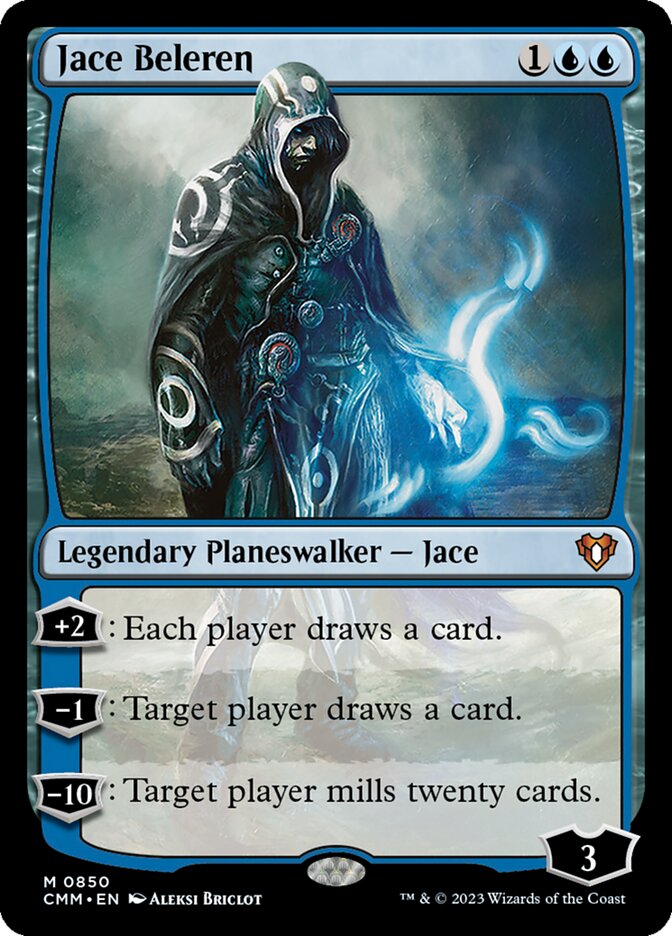
Jace Beleren liegt im Spiel. Was gilt für seine Loyalitätsfähigkeiten (+2, −1, −10)?
Tasten A bis D oder Klick. Keine Zeitbegrenzung.
Loyalitätsfähigkeiten sind aktivierte Fähigkeiten mit besonderen Regeln: Hexerei-Timing (eigene Hauptphase, Stack leer, Priorität) und nur eine pro Planeswalker pro Zug. Die Loyalitätskosten werden beim Aktivieren bezahlt, die Fähigkeit geht ganz normal auf den Stack und kann beantwortet werden, zum Beispiel indem der Gegner den Planeswalker mit einem Spontanzauber tötet.
606.2An activated ability with a loyalty symbol in its cost is a loyalty ability. Normally, only planeswalkers have loyalty abilities.
606.3A player may activate a loyalty ability of a permanent they control any time they have priority and the stack is empty during a main phase of their turn, but only if no player has previously activated a loyalty ability of that permanent that turn.
Beteiligte Karten
Ausgelöste Fähigkeiten
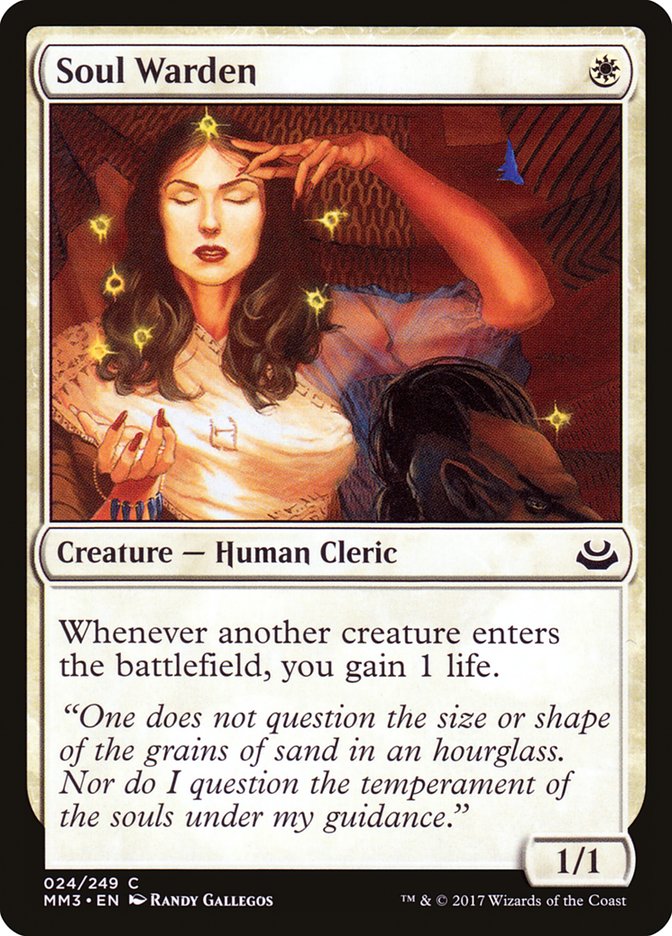
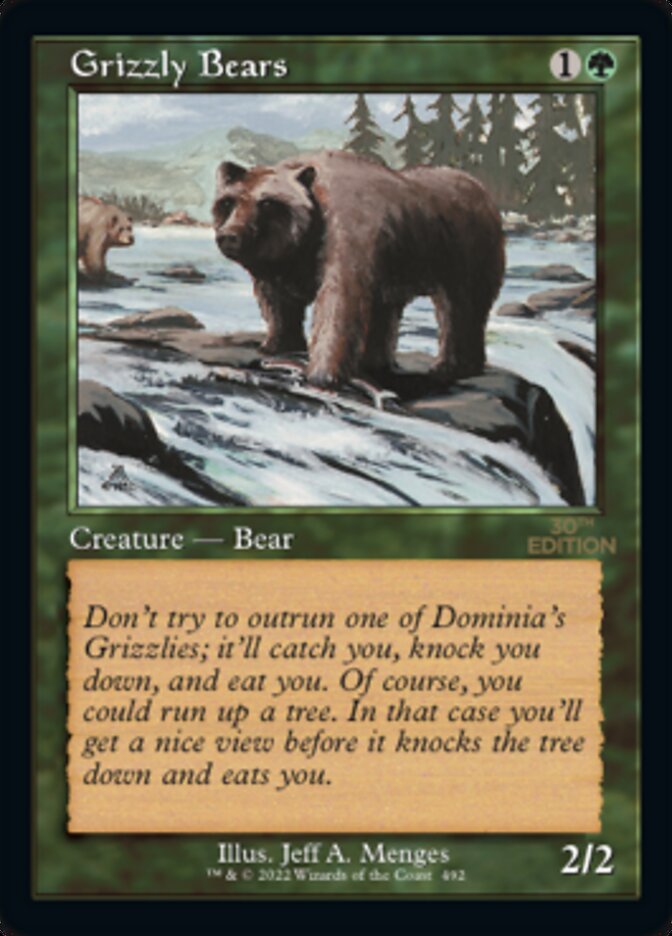
Du kontrollierst Soul Warden („Immer wenn eine andere Kreatur ins Spiel kommt, erhältst du 1 Lebenspunkt dazu."). Dein Gegner wirkt Grizzly Bears. Wann löst Soul Warden aus?
Tasten A bis D oder Klick. Keine Zeitbegrenzung.
Ein Kreaturenzauber auf dem Stack ist noch keine Kreatur im Spiel. „Kommt ins Spiel" passiert erst beim Verrechnen. In dem Moment löst Soul Warden aus, und der Trigger wird auf den Stack gelegt, bevor der nächste Spieler Priorität bekommt. „Eine andere Kreatur" meint jede Kreatur außer Soul Warden selbst, egal wem sie gehört.
603.2Whenever a game event or game state matches a triggered ability’s trigger event, that ability automatically triggers. The ability doesn’t do anything at this point.
603.3Once an ability has triggered, its controller puts it on the stack as an object that’s not a card the next time a player would receive priority. See rule 117, “Timing and Priority.” The ability becomes the topmost object on the stack. It has the text of the ability that created it, and no other characteristics. It remains on the stack until it’s countered, it resolves, a rule causes it to be removed from the stack, or an effect moves it elsewhere.
603.6aEnters-the-battlefield abilities trigger when a permanent enters the battlefield. These are written, “When [this object] enters, . . . “ or “Whenever a [type] enters, . . .” Each time an event puts one or more permanents onto the battlefield, all permanents on the battlefield (including the newcomers) are checked for any enters-the-battlefield triggers that match the event.
Beteiligte Karten
Ausgelöste Fähigkeiten
Du bist am Zug. Du und dein Gegner kontrolliert je einen Soul Warden. Du wirkst eine Kreatur, sie kommt ins Spiel, beide Soul Wardens lösen aus. In welcher Reihenfolge landen die Trigger auf dem Stack, und welcher verrechnet sich zuerst?
Tasten A bis D oder Klick. Keine Zeitbegrenzung.
APNAP: Active Player, Non-Active Player. Lösen mehrere Fähigkeiten gleichzeitig aus, legt zuerst der aktive Spieler seine auf den Stack (in beliebiger Reihenfolge, wenn er mehrere hat), danach der nicht-aktive Spieler. Weil der Stack von oben abgearbeitet wird, verrechnet sich die Fähigkeit des nicht-aktiven Spielers zuerst. Hier ist das egal, bei „Stirbt eine Kreatur"-Triggern aber oft spielentscheidend.
603.3bIf multiple abilities have triggered since the last time a player received priority, the abilities are placed on the stack in a two-part process. First, each player, in APNAP order, puts each triggered ability they control with a trigger condition that isn’t another ability triggering on the stack in any order they choose. (See rule 101.4.) Second, each player, in APNAP order, puts all remaining triggered abilities they control on the stack in any order they choose. Then the game once again checks for and performs state-based actions until none are performed, then abilities that triggered during this process go on the stack. This process repeats until no new state-based actions are performed and no abilities trigger. Then the appropriate player gets priority.
101.4If multiple players would make choices and/or take actions at the same time, the active player (the player whose turn it is) makes any choices required, then the next player in turn order (usually the player seated to the active player’s left) makes any choices required, followed by the remaining nonactive players in turn order. Then the actions happen simultaneously. This rule is often referred to as the “Active Player, Nonactive Player (APNAP) order” rule.
Beteiligte Karten

Ausgelöste Fähigkeiten
Flametongue Kavu („Wenn diese Kreatur ins Spiel kommt, fügt sie einer Kreatur deiner Wahl 4 Schadenspunkte zu.") kommt ins Spiel. Es gibt keine andere Kreatur im Spiel. Was passiert?
Tasten A bis D oder Klick. Keine Zeitbegrenzung.
Ziele werden gewählt, wenn die Fähigkeit auf den Stack gelegt wird, wie beim Wirken eines Zaubers. Gibt es ein legales Ziel, musst du es wählen, auch wenn es dir nicht gefällt. „Eine Kreatur deiner Wahl" schließt Flametongue Kavu nicht aus. Nur wenn es gar kein legales Ziel gibt, wird der Trigger vom Stack entfernt.
603.3dThe remainder of the process for putting a triggered ability on the stack is identical to the process for casting a spell listed in rules 601.2c–d. If a choice is required when the triggered ability goes on the stack but no legal choices can be made for it, or if a rule or a continuous effect otherwise makes the ability illegal, the ability is simply removed from the stack.
601.2cThe player announces their choice of an appropriate object or player for each target the spell requires. A spell may require some targets only if an alternative or additional cost (such as a kicker cost) or a particular mode was chosen for it; otherwise, the spell is cast as though it did not require those targets. Similarly, a spell may require alternative targets only if an alternative or additional cost was chosen for it. If the spell has a variable number of targets, the player announces how many targets they will choose before they announce those targets. In some cases, the number of targets will be defined by the spell’s text. Once the number of targets the spell has is determined, that number doesn’t change, even if the information used to determine the number of targets does. The same target can’t be chosen multiple times for any one instance of the word “target” on the spell. However, if the spell uses the word “target” in multiple places, the same object or player can be chosen once for each instance of the word “target” (as long as it fits the targeting criteria). If any effects say that an object or player must be chosen as a target, the player chooses targets so that they obey the maximum possible number of such effects without violating any rules or effects that say that an object or player can’t be chosen as a target. The chosen objects and/or players each become a target of that spell. (Any abilities that trigger when those objects and/or players become the target of a spell trigger at this point; they’ll wait to be put on the stack until the spell has finished being cast.)
Beteiligte Karten
Ausgelöste Fähigkeiten
Aussage
„Soul Wardens Trigger liegt auf dem Stack. Als Antwort tötet der Gegner Soul Warden mit Lightning Bolt. Der Trigger verrechnet sich trotzdem, und du bekommst den Lebenspunkt. "
Wähle eine Antwort — dann geht es weiter.
Der Trigger existiert unabhängig von seiner Quelle, sobald er auf dem Stack liegt. „Verpuffen" (nicht verrechnet werden) können in der Regel nur Zauber und Fähigkeiten mit Zielen, wenn alle ihre Ziele illegal geworden sind. Soul Wardens Trigger hat kein Ziel, also verrechnet er sich auf jeden Fall. Soul Warden als Antwort zu töten verhindert nur zukünftige Trigger.
113.7aOnce activated or triggered, an ability exists on the stack independently of its source. Destruction or removal of the source after that time won’t affect the ability. Note that some abilities cause a source to do something (for example, “This creature deals 1 damage to any target”) rather than the ability doing anything directly. In these cases, any activated or triggered ability that references information about the source for use while announcing an activated ability or putting a triggered ability on the stack checks that information when the ability is put onto the stack. Otherwise, it will check that information when it resolves. In both instances, if the source is no longer in the zone it’s expected to be in at that time, its last known information is used. The source can still perform the action even though it no longer exists.
608.2bIf the spell or ability specifies targets, it checks whether the targets are still legal. A target that’s no longer in the zone it was in when it was targeted is illegal. Other changes to the game state may cause a target to no longer be legal; for example, its characteristics may have changed or an effect may have changed the text of the spell. If the source of an ability has left the zone it was in, its last known information is used during this process. If all its targets, for every instance of the word “target,” are now illegal, the spell or ability doesn’t resolve. It’s removed from the stack and, if it’s a spell, put into its owner’s graveyard. Otherwise, the spell or ability will resolve normally. Illegal targets, if any, won’t be affected by parts of a resolving spell’s effect for which they’re illegal. Other parts of the effect for which those targets are not illegal may still affect them. If the spell or ability creates any continuous effects that affect game rules (see rule 613.11), those effects don’t apply to illegal targets. If part of the effect requires information about an illegal target, it fails to determine any such information. Any part of the effect that requires that information won’t happen.
Beteiligte Karten
Ausgelöste Fähigkeiten
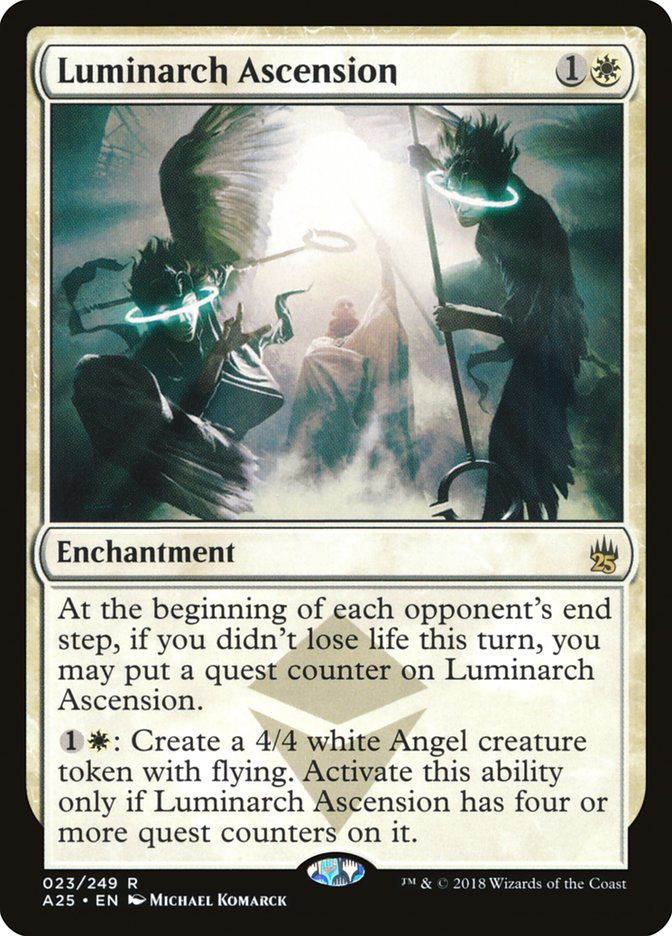
Luminarch Ascension: „Zu Beginn des Endsegments eines jeden Gegners, falls du in diesem Zug keine Lebenspunkte verloren hast, kannst du eine Questmarke auf diese Verzauberung legen." Du hast in diesem Zug keine Lebenspunkte verloren, der Trigger geht auf den Stack. Als Antwort fügt dir der Gegner 1 Schadenspunkt zu. Was passiert?
Tasten A bis D oder Klick. Keine Zeitbegrenzung.
Das ist die „intervening if"-Regel: Steht die Bedingung direkt hinter dem Auslöser („Wenn X, falls Y, …"), wird sie zweimal geprüft. Beim Auslösen: Ist sie falsch, löst die Fähigkeit gar nicht aus. Beim Verrechnen: Ist sie inzwischen falsch, wird die Fähigkeit vom Stack entfernt und tut nichts. Schaden verursacht Lebenspunktverlust, also ist die Bedingung beim Verrechnen nicht mehr erfüllt.
603.4A triggered ability may read “When/Whenever/At [trigger event], if [condition], [effect].” When the trigger event occurs, the ability checks whether the stated condition is true. The ability triggers only if it is; otherwise it does nothing. If the ability triggers, it checks the stated condition again as it resolves. If the condition isn’t true at that time, the ability is removed from the stack and does nothing. Note that this mirrors the check for legal targets. This rule is referred to as the “intervening ‘if’ clause” rule. (The word “if” has only its normal English meaning anywhere else in the text of a card; this rule only applies to an “if” that immediately follows a trigger condition.)
Beteiligte Karten

Statische Fähigkeiten
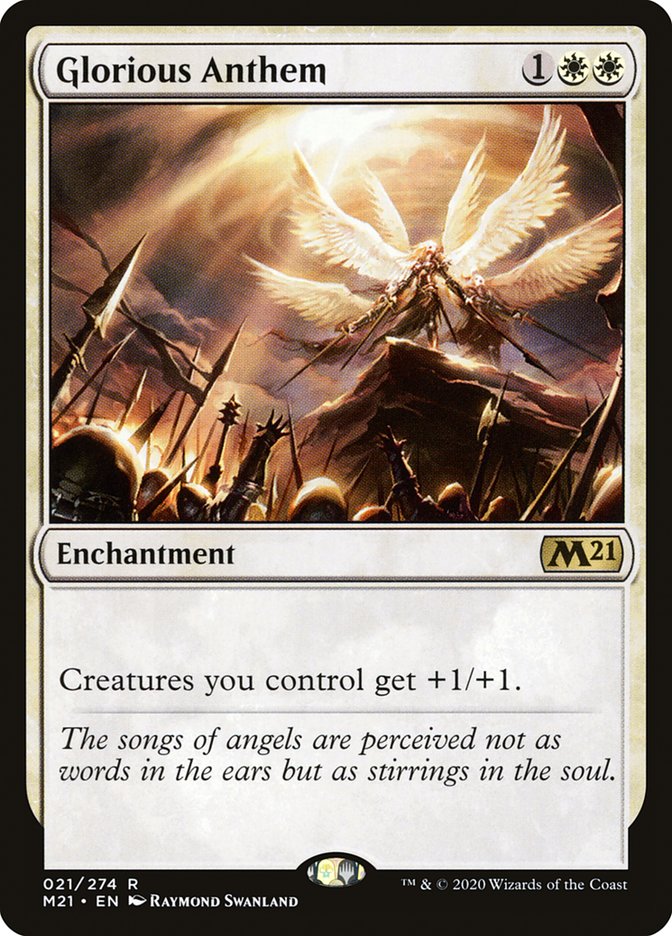
Du kontrollierst Glorious Anthem („Kreaturen, die du kontrollierst, erhalten +1/+1.") und Grizzly Bears (2/2). Der Gegner wirkt Shock (2 Schaden) auf die Bären. Was passiert, wenn du nichts tust?
Tasten A bis D oder Klick. Keine Zeitbegrenzung.
Statische Fähigkeiten sind einfach wahr, solange die Quelle im Spiel ist. Sie gehen nicht auf den Stack und werden nicht aktiviert. Die Bären sind 3/3, seit Anthem liegt. 2 Schaden auf 3 Widerstandskraft ist nicht tödlich. Es gibt nichts, worauf du „antworten" müsstest, der Bonus wirkt von selbst.
604.1Static abilities do something all the time rather than being activated or triggered. They are written as statements, and they’re simply true.
604.2Static abilities create continuous effects, some of which are prevention effects or replacement effects. These effects are active as long as the permanent with the ability remains on the battlefield and has the ability, or as long as the object with the ability remains in the appropriate zone, as described in rule 113.6.
Beteiligte Karten

Statische Fähigkeiten
Gleiche Lage: Glorious Anthem, Grizzly Bears (3/3 durch Anthem), der Gegner wirkt Shock auf die Bären. Als Antwort wirkt er zusätzlich Naturalize auf Glorious Anthem. Was passiert?
Tasten A bis D oder Klick. Keine Zeitbegrenzung.
Der Dauereffekt einer statischen Fähigkeit gilt nur, solange die Quelle im Spiel ist und die Fähigkeit hat. Verschwindet Anthem, ist der Bonus im selben Moment weg, ohne Nachwirkung bis zum Zugende (das gilt nur für Effekte verrechneter Zauber oder Fähigkeiten mit angegebener Dauer, etwa Giant Growth). Shock trifft dann einen 2/2.
604.2Static abilities create continuous effects, some of which are prevention effects or replacement effects. These effects are active as long as the permanent with the ability remains on the battlefield and has the ability, or as long as the object with the ability remains in the appropriate zone, as described in rule 113.6.
604.1Static abilities do something all the time rather than being activated or triggered. They are written as statements, and they’re simply true.
611.2aA continuous effect generated by the resolution of a spell or ability lasts as long as stated by the spell or ability creating it (such as “until end of turn”). If no duration is stated, it lasts until the end of the game.
Beteiligte Karten

Statische Fähigkeiten
Aussage
„Glorious Anthem liegt im Spiel. Mit Counterspell kann ich die statische Fähigkeit „Kreaturen, die du kontrollierst, erhalten +1/+1." neutralisieren, damit der Bonus wegfällt. "
Wähle eine Antwort — dann geht es weiter.
Neutralisieren heißt, etwas vom Stack zu entfernen. Statische Fähigkeiten gehen nie auf den Stack, es gibt also nichts zu neutralisieren. Counterspell hätte nur den Verzauberungszauber Glorious Anthem selbst treffen können, solange er auf dem Stack lag. Liegt die Verzauberung erst einmal im Spiel, hilft nur Entfernen, etwa mit Naturalize.
604.1Static abilities do something all the time rather than being activated or triggered. They are written as statements, and they’re simply true.
701.6aTo counter a spell or ability means to cancel it, removing it from the stack. It doesn’t resolve and none of its effects occur. A countered spell is put into its owner’s graveyard.
Beteiligte Karten

Statische Fähigkeiten
Tarmogoyf: „Tarmogoyfs Stärke ist gleich der Anzahl an Kartentypen unter den Karten in allen Friedhöfen, seine Widerstandskraft ist um 1 höher." Welche Stärke und Widerstandskraft hat ein Tarmogoyf in deiner Hand, wenn in den Friedhöfen Kreaturen- und Spontanzauberkarten liegen?
Tasten A bis D oder Klick. Keine Zeitbegrenzung.
Das ist eine charakteristik-definierende Fähigkeit: eine statische Fähigkeit, die Werte liefert, die sonst im P/T-Kasten stünden. Solche Fähigkeiten funktionieren in allen Zonen, in Hand, Bibliothek, Friedhof und Exil. Zwei Kartentypen in den Friedhöfen (Kreatur, Spontanzauber) machen Tarmogoyf überall zum 2/3.
604.3Some static abilities are characteristic-defining abilities. A characteristic-defining ability conveys information about an object’s characteristics that would normally be found elsewhere on that object (such as in its mana cost, type line, or power/toughness box). Characteristic-defining abilities can add to or override information found elsewhere on that object. Characteristic-defining abilities function in all zones. They also function outside the game and before the game begins.
604.3aA static ability is a characteristic-defining ability if it meets the following criteria: (1) It defines an object’s colors, subtypes, power, or toughness; (2) it is printed on the card it affects, it was granted to the token it affects by the effect that created the token, or it was acquired by the object it affects as the result of a copy effect or text-changing effect; (3) it does not directly affect the characteristics of any other objects; (4) it is not an ability that an object grants to itself; and (5) it does not set the values of such characteristics only if certain conditions are met.
Beteiligte Karten

Statische Fähigkeiten
Welche Art von Fähigkeit ist die markierte Zeile, und was folgt daraus?
Tasten A bis D oder Klick. Keine Zeitbegrenzung.
Kein „Wenn", kein Doppelpunkt, nur eine Aussage, die gilt: statische Fähigkeit. Sie erzeugt einen Dauereffekt, der in deinem Zug die Gegner einschränkt, und zwar vom ersten Moment an, in dem Grand Abolisher im Spiel liegt. Es gibt kein Fenster, in dem der Gegner „noch schnell" antworten könnte, außer er hält etwas, das nicht unter das Verbot fällt.
604.1Static abilities do something all the time rather than being activated or triggered. They are written as statements, and they’re simply true.
604.2Static abilities create continuous effects, some of which are prevention effects or replacement effects. These effects are active as long as the permanent with the ability remains on the battlefield and has the ability, or as long as the object with the ability remains in the appropriate zone, as described in rule 113.6.
Beteiligte Karten

Mana-Fähigkeiten
Du willst Grizzly Bears (
 ) wirken. Du hast nur einen ungetappten Wald () und ungetappte Llanowar Elves. Darfst du die Elfen mitten im Wirken tappen, um das zweite Mana zu bekommen?
Tasten A bis D oder Klick. Keine Zeitbegrenzung.
Der Ablauf beim Wirken sieht es vor: Nachdem die Gesamtkosten feststehen, darfst du Mana-Fähigkeiten aktivieren und erst dann bezahlst du. Mana-Fähigkeiten gehen dabei nicht auf den Stack, das Mana ist sofort da. Du darfst Mana-Fähigkeiten außerdem jederzeit mit Priorität aktivieren und immer, wenn eine Regel oder ein Effekt eine Manazahlung verlangt.
601.2gIf the total cost includes a mana payment, the player then has a chance to activate mana abilities (see rule 605, “Mana Abilities”). Mana abilities must be activated before costs are paid.
605.3aA player may activate an activated mana ability whenever they have priority, whenever they are casting a spell or activating an ability that requires a mana payment, or whenever a rule or effect asks for a mana payment, even if it’s in the middle of casting or resolving a spell or activating or resolving an ability.
Beteiligte Karten
Mana-Fähigkeiten
Aussage
„Dein Gegner tappt Llanowar Elves für . Als Antwort darauf tötest du die Elfen mit Lightning Bolt, damit das Mana nicht erzeugt wird.
"
Wähle eine Antwort — dann geht es weiter.
Eine aktivierte Mana-Fähigkeit geht nicht auf den Stack. Sie verrechnet sich sofort, das Mana liegt im Manapool, bevor irgendjemand Priorität bekommt. Es gibt kein Zeitfenster für eine „Antwort". Lightning Bolt tötet die Elfen zwar, aber das ist längst da.
605.3bAn activated mana ability doesn’t go on the stack, so it can’t be targeted, countered, or otherwise responded to. Rather, it resolves immediately after it is activated. (See rule 405.6c.)
405.6cMana abilities resolve immediately. If a mana ability both produces mana and has another effect, the mana is produced and the other effect happens immediately. If a player had priority before a mana ability was activated, that player gets priority after it resolves. (See rule 605, “Mana Abilities.”)
Beteiligte Karten

Mana-Fähigkeiten
: Schicke eine Landkarte deiner Wahl aus einem Friedhof ins Exil. Erzeuge ein Mana einer beliebigen Farbe.
Welche Art von Fähigkeit ist die markierte Zeile von Deathrite Shaman?
Tasten A bis D oder Klick. Keine Zeitbegrenzung.
Eine aktivierte Fähigkeit ist nur dann eine Mana-Fähigkeit, wenn sie alle Kriterien erfüllt: kein Ziel, könnte Mana erzeugen, keine Loyalitätsfähigkeit, bewegt keine Karte in die oder aus der Bibliothek. „Eine Landkarte deiner Wahl" ist ein Ziel. Also geht die Fähigkeit auf den Stack, kann beantwortet werden, und das Mana kommt erst beim Verrechnen. Mitten im Bezahlen eines Zaubers kannst du sie deshalb nicht nutzen.
605.1aAn activated ability is a mana ability if it meets all of the following criteria: it doesn’t require a target (see rule 115.6), it could add mana to a player’s mana pool when it resolves, it’s not a loyalty ability (see rule 606, “Loyalty Abilities”), and its cost and effect don’t move any card to or from a library. Do not take into account replacement effects that may apply, other than self-replacement effects, when evaluating these criteria.
605.3bAn activated mana ability doesn’t go on the stack, so it can’t be targeted, countered, or otherwise responded to. Rather, it resolves immediately after it is activated. (See rule 405.6c.)
Beteiligte Karten

Mana-Fähigkeiten
Evolving Wilds: „, opfere dieses Land: Durchsuche deine Bibliothek nach einer Standardlandkarte, bringe sie getappt ins Spiel, mische danach." Was stimmt?
Tasten A bis D oder Klick. Keine Zeitbegrenzung.
Mana-Fähigkeit heißt nicht „Fähigkeit eines Landes", sondern „könnte beim Verrechnen Mana erzeugen". Evolving Wilds erzeugt kein Mana, es sucht ein Land. Außerdem bewegt die Fähigkeit eine Karte aus der Bibliothek, was Mana-Fähigkeiten ausdrücklich nicht dürfen. Sie geht also ganz normal auf den Stack. Deshalb kann man sie etwa neutralisieren oder in Antwort darauf handeln.
605.1aAn activated ability is a mana ability if it meets all of the following criteria: it doesn’t require a target (see rule 115.6), it could add mana to a player’s mana pool when it resolves, it’s not a loyalty ability (see rule 606, “Loyalty Abilities”), and its cost and effect don’t move any card to or from a library. Do not take into account replacement effects that may apply, other than self-replacement effects, when evaluating these criteria.
602.2To activate an ability is to put it onto the stack and pay its costs, so that it will eventually resolve and have its effect. Only an object’s controller (or its owner, if it doesn’t have a controller) can activate its activated ability unless the object specifically says otherwise. Activating an ability follows the steps listed below, in order. If, at any point during the activation of an ability, a player is unable to comply with any of those steps, the activation is illegal; the game returns to the moment before that ability started to be activated (see rule 733, “Handling Illegal Actions”). Announcements and payments can’t be altered after they’ve been made.
Beteiligte Karten
Mana-Fähigkeiten
In deiner Hauptphase 1 tappst du Llanowar Elves für , überlegst es dir anders und wirkst nichts. Du gehst in den Kampf. Hast du das dort noch?
Tasten A bis D oder Klick. Keine Zeitbegrenzung.
Ungenutztes Mana verschwindet am Ende jedes Segments und jeder Phase. Hauptphase 1 endet, der Pool ist leer. Den „Mana-Brand" (Lebenspunktverlust für ungenutztes Mana) gibt es seit 2009 nicht mehr. Die Elfen bleiben getappt. Deshalb tappt man Mana erst, wenn man es wirklich bezahlt.
106.4When an effect instructs a player to add mana, that mana goes into a player’s mana pool. From there, it can be used to pay costs immediately, or it can stay in the player’s mana pool as unspent mana. Each player’s mana pool empties at the end of each step and phase, and the player is said to lose this mana. Cards with abilities that produce mana or refer to unspent mana have received errata in the Oracle™ card reference to no longer explicitly refer to the mana pool.