The Copy Knows Its X
Judge Level 2Fireball with X=5 gets copied — and the copy burns just as big.
Cards involved
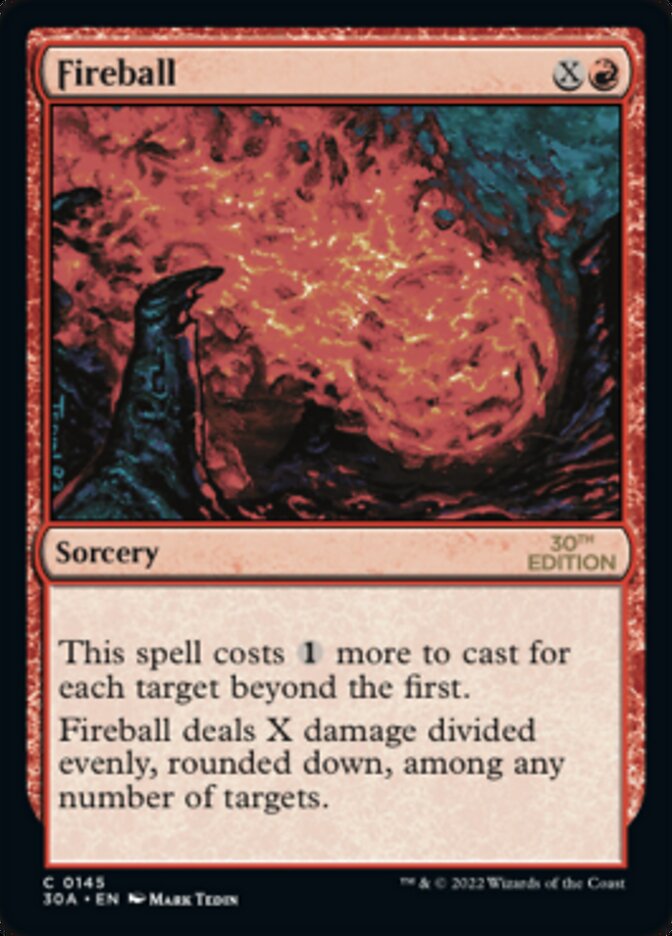
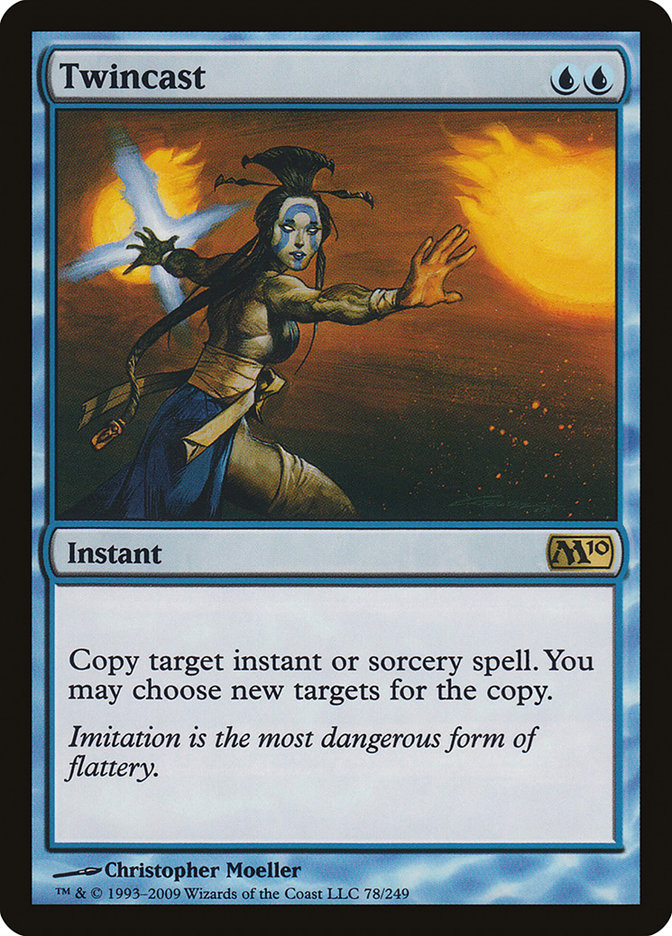
The big ball
Your opponent casts Fireball with X=5 targeting you.
You copy it
Twincast on the Fireball — and you choose a new target for the copy: your opponent.
What happens?
How big does the copy burn?
No mana was ever paid for the copy. What is its X?
Pick an answer to continue.
CR 707.10: characteristics AND all decisions made while casting are copied, including X. Nothing needs to be paid — the copy isn't cast, it's created.
707.10To copy a spell, activated ability, or triggered ability means to put a copy of it onto the stack; a copy of a spell isn’t cast and a copy of an activated ability isn’t activated. A copy of a spell or ability copies both the characteristics of the spell or ability and all decisions made for it, including modes, targets, the value of X, and additional or alternative costs. (See rule 601, “Casting Spells.”) Choices that are normally made on resolution are not copied. If an effect of the copy refers to objects used to pay its costs, it uses the objects used to pay the costs of the original spell or ability. A copy of a spell is owned by the player under whose control it was put on the stack. A copy of a spell or ability is controlled by the player under whose control it was put on the stack. A copy of a spell is itself a spell, even though it has no spell card associated with it. A copy of an ability is itself an ability.
Burned twice
The copy resolves first: 5 damage to your opponent. Then the original: 5 to you. Together with the mana value scenario: on the stack, X is "real" everywhere — copies included.
707.10To copy a spell, activated ability, or triggered ability means to put a copy of it onto the stack; a copy of a spell isn’t cast and a copy of an activated ability isn’t activated. A copy of a spell or ability copies both the characteristics of the spell or ability and all decisions made for it, including modes, targets, the value of X, and additional or alternative costs. (See rule 601, “Casting Spells.”) Choices that are normally made on resolution are not copied. If an effect of the copy refers to objects used to pay its costs, it uses the objects used to pay the costs of the original spell or ability. A copy of a spell is owned by the player under whose control it was put on the stack. A copy of a spell or ability is controlled by the player under whose control it was put on the stack. A copy of a spell is itself a spell, even though it has no spell card associated with it. A copy of an ability is itself an ability.
Stack

Fireball
Announced with X=5 — target: you
Twincast
Copy the Fireball; new targets allowed
Copy: Fireball
Copy — X=5, target: your opponent
The stack is empty.
In short
What is X for a copy of an X spell?
Show answer Hide answer
CR 707.10: characteristics AND all decisions made while casting are copied, including X. Nothing needs to be paid — the copy isn't cast, it's created.
707.10To copy a spell, activated ability, or triggered ability means to put a copy of it onto the stack; a copy of a spell isn’t cast and a copy of an activated ability isn’t activated. A copy of a spell or ability copies both the characteristics of the spell or ability and all decisions made for it, including modes, targets, the value of X, and additional or alternative costs. (See rule 601, “Casting Spells.”) Choices that are normally made on resolution are not copied. If an effect of the copy refers to objects used to pay its costs, it uses the objects used to pay the costs of the original spell or ability. A copy of a spell is owned by the player under whose control it was put on the stack. A copy of a spell or ability is controlled by the player under whose control it was put on the stack. A copy of a spell is itself a spell, even though it has no spell card associated with it. A copy of an ability is itself an ability.