Level 2 · Abilities
Cards involved

Activated abilities
You cast Prodigal Sorcerer this main phase; it is untapped on the battlefield. May you activate " : This creature deals 1 damage to any target." this turn?
Keys A to D or click. No time limit.
"Summoning sickness" covers two things: attacking and abilities with or  in their cost. Both require that you have controlled the creature continuously since your most recent turn began. Abilities without a tap symbol (like "
 : +1/+0") work right away. Haste lifts both restrictions.
302.6A creature’s activated ability with the tap symbol or the untap symbol in its activation cost can’t be activated unless the creature has been under its controller’s control continuously since their most recent turn began. A creature can’t attack unless it has been under its controller’s control continuously since their most recent turn began. This rule is informally called the “summoning sickness” rule.
702.10cIf a creature has haste, its controller can activate its activated abilities whose cost includes the tap symbol or the untap symbol even if that creature hasn’t been controlled by that player continuously since their most recent turn began. (See rule 302.6.)
Cards involved

Activated abilities
Statement
„You activate Prodigal Sorcerer's ability targeting your opponent. In response, they kill the Sorcerer with Lightning Bolt. Your opponent still takes the 1 damage. "
Pick an answer — then move on.
Once an ability is on the stack, it exists independently of its source. Destroying the source afterwards changes nothing: the ability resolves. For the Sorcerer dealing the damage "itself", the game uses its last known information. As a rule, only spells and abilities with targets can still fail, namely when all their targets have become illegal. The opponent is still a legal target.
113.7aOnce activated or triggered, an ability exists on the stack independently of its source. Destruction or removal of the source after that time won’t affect the ability. Note that some abilities cause a source to do something (for example, “This creature deals 1 damage to any target”) rather than the ability doing anything directly. In these cases, any activated or triggered ability that references information about the source for use while announcing an activated ability or putting a triggered ability on the stack checks that information when the ability is put onto the stack. Otherwise, it will check that information when it resolves. In both instances, if the source is no longer in the zone it’s expected to be in at that time, its last known information is used. The source can still perform the action even though it no longer exists.
608.2bIf the spell or ability specifies targets, it checks whether the targets are still legal. A target that’s no longer in the zone it was in when it was targeted is illegal. Other changes to the game state may cause a target to no longer be legal; for example, its characteristics may have changed or an effect may have changed the text of the spell. If the source of an ability has left the zone it was in, its last known information is used during this process. If all its targets, for every instance of the word “target,” are now illegal, the spell or ability doesn’t resolve. It’s removed from the stack and, if it’s a spell, put into its owner’s graveyard. Otherwise, the spell or ability will resolve normally. Illegal targets, if any, won’t be affected by parts of a resolving spell’s effect for which they’re illegal. Other parts of the effect for which those targets are not illegal may still affect them. If the spell or ability creates any continuous effects that affect game rules (see rule 613.11), those effects don’t apply to illegal targets. If part of the effect requires information about an illegal target, it fails to determine any such information. Any part of the effect that requires that information won’t happen.
Cards involved

Activated abilities
Your opponent casts Lightning Bolt targeting your Sakura-Tribe Elder. In response you activate "Sacrifice this creature: Search for a basic land." What happens as the stack resolves?
Keys A to D or click. No time limit.
Costs are paid when you activate, not when the ability resolves. The Elder goes to the graveyard immediately, the ability sits above the Bolt on the stack and resolves first. When Lightning Bolt's turn comes, its only target is gone: it doesn't resolve and goes to the graveyard. This is the classic reason sacrifice abilities make removal "fizzle".
602.2bThe remainder of the process for activating an ability is identical to the process for casting a spell listed in rules 601.2b–i. Those rules apply to activating an ability just as they apply to casting a spell. An activated ability’s analog to a spell’s mana cost (as referenced in rule 601.2f) is its activation cost.
601.2hThe player pays the total cost. First, they pay all costs that don’t involve random elements or moving objects from the library to a public zone, in any order. Then they pay all remaining costs in any order. Partial payments are not allowed. Unpayable costs can’t be paid.
608.2bIf the spell or ability specifies targets, it checks whether the targets are still legal. A target that’s no longer in the zone it was in when it was targeted is illegal. Other changes to the game state may cause a target to no longer be legal; for example, its characteristics may have changed or an effect may have changed the text of the spell. If the source of an ability has left the zone it was in, its last known information is used during this process. If all its targets, for every instance of the word “target,” are now illegal, the spell or ability doesn’t resolve. It’s removed from the stack and, if it’s a spell, put into its owner’s graveyard. Otherwise, the spell or ability will resolve normally. Illegal targets, if any, won’t be affected by parts of a resolving spell’s effect for which they’re illegal. Other parts of the effect for which those targets are not illegal may still affect them. If the spell or ability creates any continuous effects that affect game rules (see rule 613.11), those effects don’t apply to illegal targets. If part of the effect requires information about an illegal target, it fails to determine any such information. Any part of the effect that requires that information won’t happen.
Cards involved

Activated abilities
Your Shivan Dragon is blocked by a 5/5. You have three red mana available. How many times may you activate ": This creature gets +1/+0 until end of turn."?
Keys A to D or click. No time limit.
An activated ability may be activated as often as you can pay its cost, unless the card says otherwise ("Activate only once each turn"). Each activation goes on the stack separately and resolves separately. With the Dragon becomes 8/5 until end of turn.
602.2To activate an ability is to put it onto the stack and pay its costs, so that it will eventually resolve and have its effect. Only an object’s controller (or its owner, if it doesn’t have a controller) can activate its activated ability unless the object specifically says otherwise. Activating an ability follows the steps listed below, in order. If, at any point during the activation of an ability, a player is unable to comply with any of those steps, the activation is illegal; the game returns to the moment before that ability started to be activated (see rule 733, “Handling Illegal Actions”). Announcements and payments can’t be altered after they’ve been made.
602.2aThe player announces that they are activating the ability. If an activated ability is being activated from a hidden zone, the card that has that ability is revealed (see rule 701.20a). That ability is created on the stack as an object that’s not a card. It becomes the topmost object on the stack. It has the text of the ability that created it, and no other characteristics. Its controller is the player who activated the ability. The ability remains on the stack until it’s countered, it resolves, or an effect moves it elsewhere.
Cards involved
Activated abilities
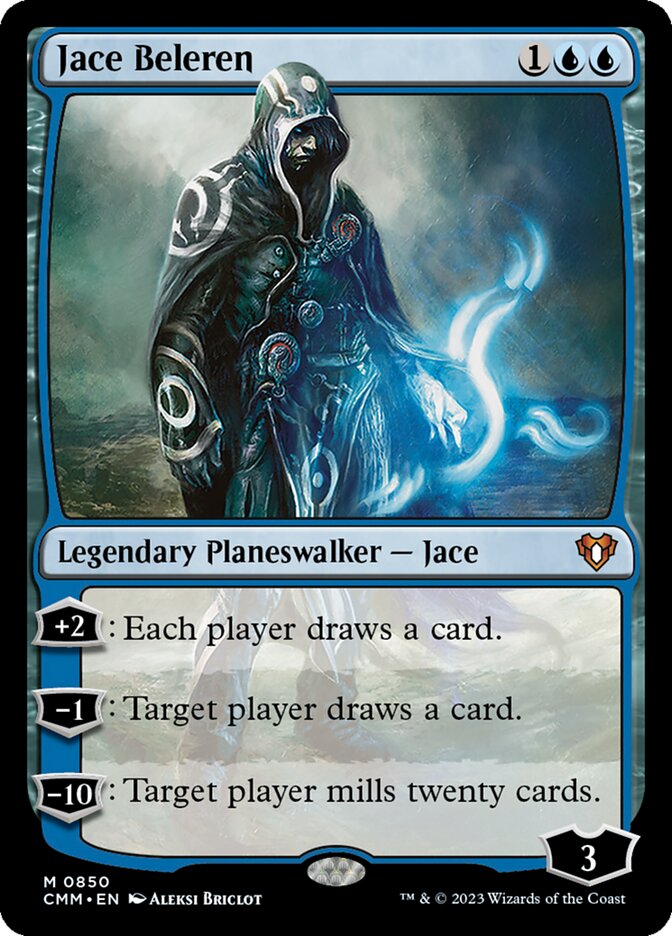
Jace Beleren is on the battlefield. What is true of its loyalty abilities (+2, −1, −10)?
Keys A to D or click. No time limit.
Loyalty abilities are activated abilities with special rules: sorcery timing (your main phase, empty stack, priority) and only one per planeswalker per turn. The loyalty cost is paid on activation; the ability then goes on the stack like any other and can be responded to, for example by killing the planeswalker with an instant.
606.2An activated ability with a loyalty symbol in its cost is a loyalty ability. Normally, only planeswalkers have loyalty abilities.
606.3A player may activate a loyalty ability of a permanent they control any time they have priority and the stack is empty during a main phase of their turn, but only if no player has previously activated a loyalty ability of that permanent that turn.
Cards involved
Triggered abilities
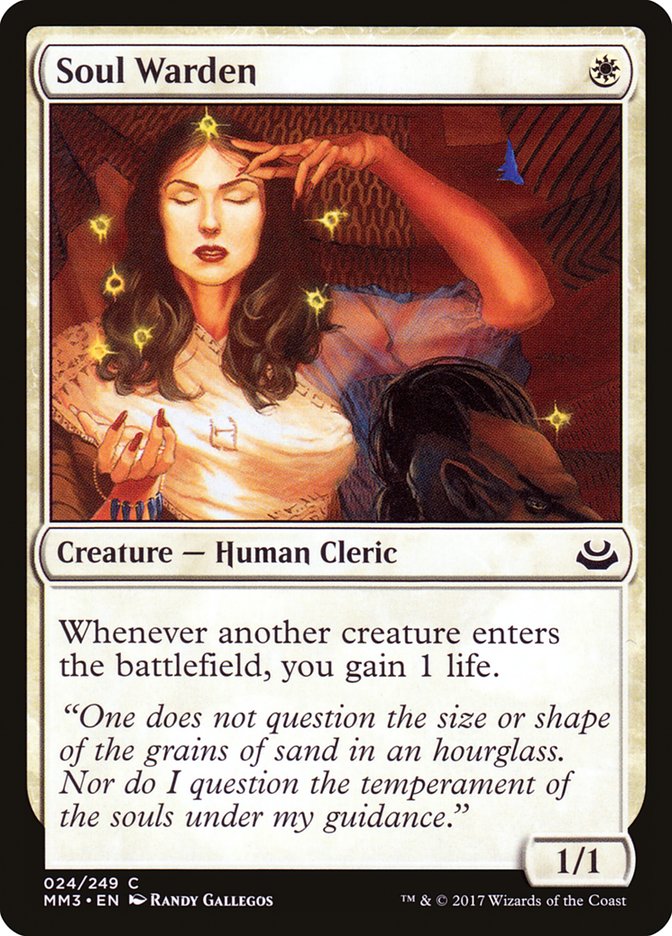
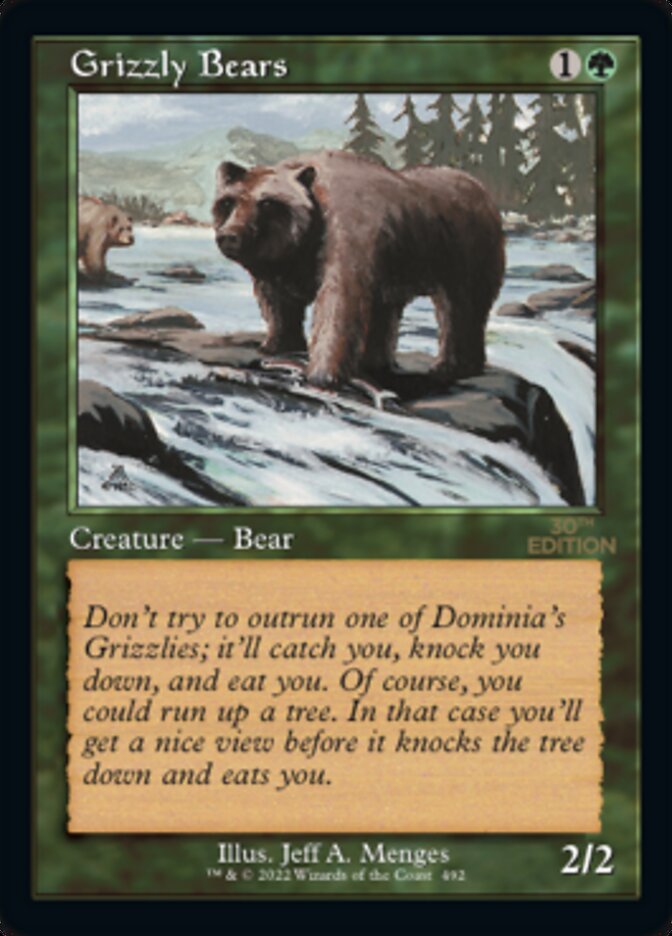
You control Soul Warden ("Whenever another creature enters, you gain 1 life."). Your opponent casts Grizzly Bears. When does Soul Warden trigger?
Keys A to D or click. No time limit.
A creature spell on the stack isn't a creature on the battlefield yet. "Enters" happens on resolution. At that moment Soul Warden triggers, and the trigger is put on the stack before the next player receives priority. "Another creature" means any creature except Soul Warden itself, no matter who controls it.
603.2Whenever a game event or game state matches a triggered ability’s trigger event, that ability automatically triggers. The ability doesn’t do anything at this point.
603.3Once an ability has triggered, its controller puts it on the stack as an object that’s not a card the next time a player would receive priority. See rule 117, “Timing and Priority.” The ability becomes the topmost object on the stack. It has the text of the ability that created it, and no other characteristics. It remains on the stack until it’s countered, it resolves, a rule causes it to be removed from the stack, or an effect moves it elsewhere.
603.6aEnters-the-battlefield abilities trigger when a permanent enters the battlefield. These are written, “When [this object] enters, . . . “ or “Whenever a [type] enters, . . .” Each time an event puts one or more permanents onto the battlefield, all permanents on the battlefield (including the newcomers) are checked for any enters-the-battlefield triggers that match the event.
Cards involved
Triggered abilities
It is your turn. You and your opponent each control a Soul Warden. You cast a creature, it enters, both Soul Wardens trigger. In which order do the triggers go on the stack, and which resolves first?
Keys A to D or click. No time limit.
APNAP: Active Player, Non-Active Player. When several abilities trigger at the same time, the active player puts theirs on the stack first (in any order, if there are several), then the non-active player. Because the stack resolves from the top, the non-active player's ability resolves first. Irrelevant here, but often decisive with "whenever a creature dies" triggers.
603.3bIf multiple abilities have triggered since the last time a player received priority, the abilities are placed on the stack in a two-part process. First, each player, in APNAP order, puts each triggered ability they control with a trigger condition that isn’t another ability triggering on the stack in any order they choose. (See rule 101.4.) Second, each player, in APNAP order, puts all remaining triggered abilities they control on the stack in any order they choose. Then the game once again checks for and performs state-based actions until none are performed, then abilities that triggered during this process go on the stack. This process repeats until no new state-based actions are performed and no abilities trigger. Then the appropriate player gets priority.
101.4If multiple players would make choices and/or take actions at the same time, the active player (the player whose turn it is) makes any choices required, then the next player in turn order (usually the player seated to the active player’s left) makes any choices required, followed by the remaining nonactive players in turn order. Then the actions happen simultaneously. This rule is often referred to as the “Active Player, Nonactive Player (APNAP) order” rule.
Cards involved

Triggered abilities
Flametongue Kavu ("When this creature enters, it deals 4 damage to target creature.") enters the battlefield. There is no other creature on the battlefield. What happens?
Keys A to D or click. No time limit.
Targets are chosen when the ability is put on the stack, just like when casting a spell. If there is a legal target, you must choose it, even if you don't like it. "Target creature" doesn't exclude Flametongue Kavu. Only if there is no legal target at all is the trigger removed from the stack.
603.3dThe remainder of the process for putting a triggered ability on the stack is identical to the process for casting a spell listed in rules 601.2c–d. If a choice is required when the triggered ability goes on the stack but no legal choices can be made for it, or if a rule or a continuous effect otherwise makes the ability illegal, the ability is simply removed from the stack.
601.2cThe player announces their choice of an appropriate object or player for each target the spell requires. A spell may require some targets only if an alternative or additional cost (such as a kicker cost) or a particular mode was chosen for it; otherwise, the spell is cast as though it did not require those targets. Similarly, a spell may require alternative targets only if an alternative or additional cost was chosen for it. If the spell has a variable number of targets, the player announces how many targets they will choose before they announce those targets. In some cases, the number of targets will be defined by the spell’s text. Once the number of targets the spell has is determined, that number doesn’t change, even if the information used to determine the number of targets does. The same target can’t be chosen multiple times for any one instance of the word “target” on the spell. However, if the spell uses the word “target” in multiple places, the same object or player can be chosen once for each instance of the word “target” (as long as it fits the targeting criteria). If any effects say that an object or player must be chosen as a target, the player chooses targets so that they obey the maximum possible number of such effects without violating any rules or effects that say that an object or player can’t be chosen as a target. The chosen objects and/or players each become a target of that spell. (Any abilities that trigger when those objects and/or players become the target of a spell trigger at this point; they’ll wait to be put on the stack until the spell has finished being cast.)
Cards involved
Triggered abilities
Statement
„Soul Warden's trigger is on the stack. In response, your opponent kills Soul Warden with Lightning Bolt. The trigger still resolves and you gain the life. "
Pick an answer — then move on.
Once on the stack, the trigger exists independently of its source. As a rule, only spells and abilities with targets can "fizzle" (fail to resolve), and only when all their targets have become illegal. Soul Warden's trigger has no target, so it resolves no matter what. Killing Soul Warden in response only prevents future triggers.
113.7aOnce activated or triggered, an ability exists on the stack independently of its source. Destruction or removal of the source after that time won’t affect the ability. Note that some abilities cause a source to do something (for example, “This creature deals 1 damage to any target”) rather than the ability doing anything directly. In these cases, any activated or triggered ability that references information about the source for use while announcing an activated ability or putting a triggered ability on the stack checks that information when the ability is put onto the stack. Otherwise, it will check that information when it resolves. In both instances, if the source is no longer in the zone it’s expected to be in at that time, its last known information is used. The source can still perform the action even though it no longer exists.
608.2bIf the spell or ability specifies targets, it checks whether the targets are still legal. A target that’s no longer in the zone it was in when it was targeted is illegal. Other changes to the game state may cause a target to no longer be legal; for example, its characteristics may have changed or an effect may have changed the text of the spell. If the source of an ability has left the zone it was in, its last known information is used during this process. If all its targets, for every instance of the word “target,” are now illegal, the spell or ability doesn’t resolve. It’s removed from the stack and, if it’s a spell, put into its owner’s graveyard. Otherwise, the spell or ability will resolve normally. Illegal targets, if any, won’t be affected by parts of a resolving spell’s effect for which they’re illegal. Other parts of the effect for which those targets are not illegal may still affect them. If the spell or ability creates any continuous effects that affect game rules (see rule 613.11), those effects don’t apply to illegal targets. If part of the effect requires information about an illegal target, it fails to determine any such information. Any part of the effect that requires that information won’t happen.
Cards involved
Triggered abilities
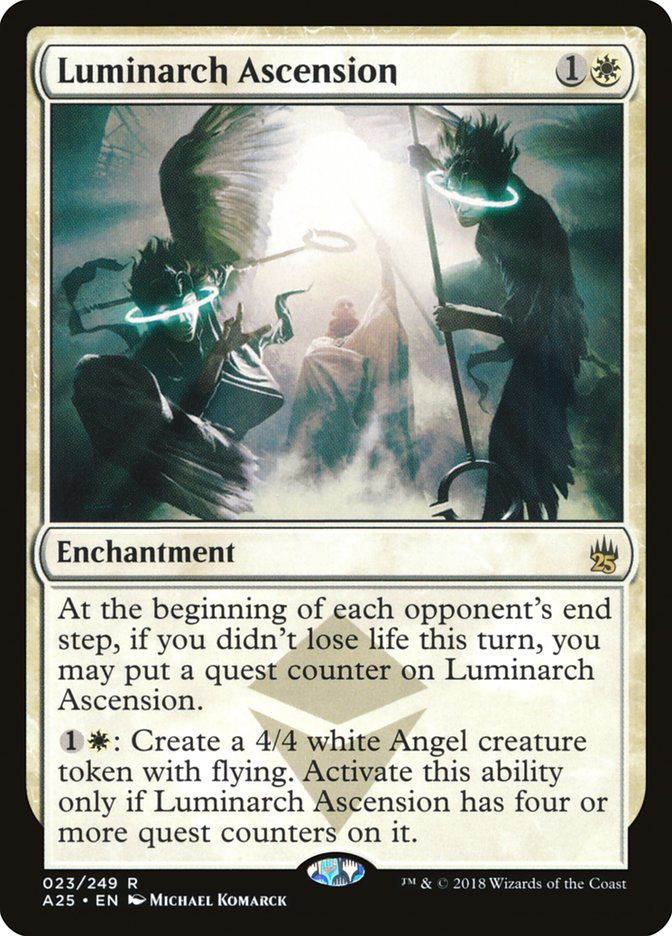
Luminarch Ascension: "At the beginning of each opponent's end step, if you didn't lose life this turn, you may put a quest counter on this enchantment." You haven't lost life this turn, the trigger goes on the stack. In response, your opponent deals 1 damage to you. What happens?
Keys A to D or click. No time limit.
This is the "intervening if" rule: if the condition sits right behind the trigger event ("When X, if Y, …"), it is checked twice. On triggering: if false, the ability doesn't trigger at all. On resolution: if it has become false, the ability is removed from the stack and does nothing. Damage causes loss of life, so the condition is no longer met on resolution.
603.4A triggered ability may read “When/Whenever/At [trigger event], if [condition], [effect].” When the trigger event occurs, the ability checks whether the stated condition is true. The ability triggers only if it is; otherwise it does nothing. If the ability triggers, it checks the stated condition again as it resolves. If the condition isn’t true at that time, the ability is removed from the stack and does nothing. Note that this mirrors the check for legal targets. This rule is referred to as the “intervening ‘if’ clause” rule. (The word “if” has only its normal English meaning anywhere else in the text of a card; this rule only applies to an “if” that immediately follows a trigger condition.)
Cards involved

Static abilities
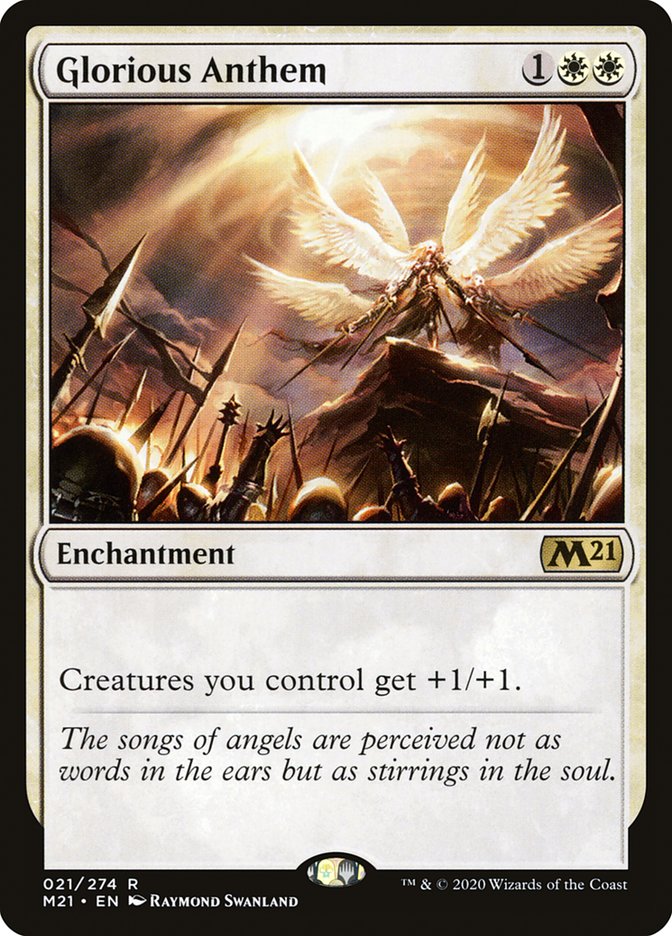
You control Glorious Anthem ("Creatures you control get +1/+1.") and Grizzly Bears (2/2). Your opponent casts Shock (2 damage) targeting the Bears. What happens if you do nothing?
Keys A to D or click. No time limit.
Static abilities are simply true as long as their source is on the battlefield. They don't use the stack and aren't activated. The Bears have been 3/3 since Anthem arrived. 2 damage against 3 toughness isn't lethal. There is nothing you would need to "respond" with; the bonus works on its own.
604.1Static abilities do something all the time rather than being activated or triggered. They are written as statements, and they’re simply true.
604.2Static abilities create continuous effects, some of which are prevention effects or replacement effects. These effects are active as long as the permanent with the ability remains on the battlefield and has the ability, or as long as the object with the ability remains in the appropriate zone, as described in rule 113.6.
Cards involved

Static abilities
Same situation: Glorious Anthem, Grizzly Bears (3/3 thanks to Anthem), your opponent casts Shock targeting the Bears. In response they also cast Naturalize targeting Glorious Anthem. What happens?
Keys A to D or click. No time limit.
The continuous effect of a static ability only applies while the source is on the battlefield and has the ability. Once Anthem is gone, the bonus is gone that very moment, with no lingering until end of turn (that only applies to effects of resolved spells or abilities with a stated duration, such as Giant Growth). Shock then hits a 2/2.
604.2Static abilities create continuous effects, some of which are prevention effects or replacement effects. These effects are active as long as the permanent with the ability remains on the battlefield and has the ability, or as long as the object with the ability remains in the appropriate zone, as described in rule 113.6.
604.1Static abilities do something all the time rather than being activated or triggered. They are written as statements, and they’re simply true.
611.2aA continuous effect generated by the resolution of a spell or ability lasts as long as stated by the spell or ability creating it (such as “until end of turn”). If no duration is stated, it lasts until the end of the game.
Cards involved

Static abilities
Statement
„Glorious Anthem is on the battlefield. With Counterspell I can counter the static ability "Creatures you control get +1/+1." so the bonus goes away. "
Pick an answer — then move on.
Countering means removing something from the stack. Static abilities never use the stack, so there is nothing to counter. Counterspell could only have hit the enchantment spell Glorious Anthem itself while it was on the stack. Once the enchantment is on the battlefield, only removal helps, such as Naturalize.
604.1Static abilities do something all the time rather than being activated or triggered. They are written as statements, and they’re simply true.
701.6aTo counter a spell or ability means to cancel it, removing it from the stack. It doesn’t resolve and none of its effects occur. A countered spell is put into its owner’s graveyard.
Cards involved

Static abilities
Tarmogoyf: "Tarmogoyf's power is equal to the number of card types among cards in all graveyards and its toughness is equal to that number plus 1." What are the power and toughness of a Tarmogoyf in your hand if creature and instant cards are in the graveyards?
Keys A to D or click. No time limit.
This is a characteristic-defining ability: a static ability that supplies values which would otherwise sit in the P/T box. Such abilities function in all zones: hand, library, graveyard and exile. Two card types in the graveyards (creature, instant) make Tarmogoyf a 2/3 everywhere.
604.3Some static abilities are characteristic-defining abilities. A characteristic-defining ability conveys information about an object’s characteristics that would normally be found elsewhere on that object (such as in its mana cost, type line, or power/toughness box). Characteristic-defining abilities can add to or override information found elsewhere on that object. Characteristic-defining abilities function in all zones. They also function outside the game and before the game begins.
604.3aA static ability is a characteristic-defining ability if it meets the following criteria: (1) It defines an object’s colors, subtypes, power, or toughness; (2) it is printed on the card it affects, it was granted to the token it affects by the effect that created the token, or it was acquired by the object it affects as the result of a copy effect or text-changing effect; (3) it does not directly affect the characteristics of any other objects; (4) it is not an ability that an object grants to itself; and (5) it does not set the values of such characteristics only if certain conditions are met.
Cards involved

Static abilities
What kind of ability is the highlighted line, and what follows from that?
Keys A to D or click. No time limit.
No "when", no colon, just a statement that holds: a static ability. It creates a continuous effect that restricts your opponents during your turn, from the very moment Grand Abolisher is on the battlefield. There is no window in which your opponent could "quickly" respond, unless they hold something the restriction doesn't cover.
604.1Static abilities do something all the time rather than being activated or triggered. They are written as statements, and they’re simply true.
604.2Static abilities create continuous effects, some of which are prevention effects or replacement effects. These effects are active as long as the permanent with the ability remains on the battlefield and has the ability, or as long as the object with the ability remains in the appropriate zone, as described in rule 113.6.
Cards involved

Mana abilities
You want to cast Grizzly Bears (
 ). You have only one untapped Forest () and untapped Llanowar Elves. May you tap the Elves in the middle of casting to get the second mana?
Keys A to D or click. No time limit.
The casting process provides for it: once the total cost is determined, you may activate mana abilities, and only then do you pay. Mana abilities don't use the stack; the mana is there immediately. You may also activate mana abilities whenever you have priority and whenever a rule or effect asks for a mana payment.
601.2gIf the total cost includes a mana payment, the player then has a chance to activate mana abilities (see rule 605, “Mana Abilities”). Mana abilities must be activated before costs are paid.
605.3aA player may activate an activated mana ability whenever they have priority, whenever they are casting a spell or activating an ability that requires a mana payment, or whenever a rule or effect asks for a mana payment, even if it’s in the middle of casting or resolving a spell or activating or resolving an ability.
Cards involved
Mana abilities
Statement
„Your opponent taps Llanowar Elves for . In response, you kill the Elves with Lightning Bolt so the mana isn't produced.
"
Pick an answer — then move on.
An activated mana ability doesn't use the stack. It resolves immediately; the mana is in the mana pool before anyone receives priority. There is no window for a "response". Lightning Bolt kills the Elves, but the is long since there.
605.3bAn activated mana ability doesn’t go on the stack, so it can’t be targeted, countered, or otherwise responded to. Rather, it resolves immediately after it is activated. (See rule 405.6c.)
405.6cMana abilities resolve immediately. If a mana ability both produces mana and has another effect, the mana is produced and the other effect happens immediately. If a player had priority before a mana ability was activated, that player gets priority after it resolves. (See rule 605, “Mana Abilities.”)
Cards involved

Mana abilities
: Exile target land card from a graveyard. Add one mana of any color.
What kind of ability is Deathrite Shaman's highlighted line?
Keys A to D or click. No time limit.
An activated ability is a mana ability only if it meets every criterion: no target, could add mana, not a loyalty ability, doesn't move a card to or from a library. "Target land card" is a target. So the ability uses the stack, can be responded to, and the mana only arrives on resolution. That is why you can't use it in the middle of paying for a spell.
605.1aAn activated ability is a mana ability if it meets all of the following criteria: it doesn’t require a target (see rule 115.6), it could add mana to a player’s mana pool when it resolves, it’s not a loyalty ability (see rule 606, “Loyalty Abilities”), and its cost and effect don’t move any card to or from a library. Do not take into account replacement effects that may apply, other than self-replacement effects, when evaluating these criteria.
605.3bAn activated mana ability doesn’t go on the stack, so it can’t be targeted, countered, or otherwise responded to. Rather, it resolves immediately after it is activated. (See rule 405.6c.)
Cards involved

Mana abilities
Evolving Wilds: ", Sacrifice this land: Search your library for a basic land card, put it onto the battlefield tapped, then shuffle." Which is true?
Keys A to D or click. No time limit.
"Mana ability" doesn't mean "ability of a land" but "could add mana on resolution". Evolving Wilds adds no mana; it searches for a land. It also moves a card out of the library, which mana abilities explicitly may not do. So it uses the stack like any other activated ability, which is why it can be countered or responded to.
605.1aAn activated ability is a mana ability if it meets all of the following criteria: it doesn’t require a target (see rule 115.6), it could add mana to a player’s mana pool when it resolves, it’s not a loyalty ability (see rule 606, “Loyalty Abilities”), and its cost and effect don’t move any card to or from a library. Do not take into account replacement effects that may apply, other than self-replacement effects, when evaluating these criteria.
602.2To activate an ability is to put it onto the stack and pay its costs, so that it will eventually resolve and have its effect. Only an object’s controller (or its owner, if it doesn’t have a controller) can activate its activated ability unless the object specifically says otherwise. Activating an ability follows the steps listed below, in order. If, at any point during the activation of an ability, a player is unable to comply with any of those steps, the activation is illegal; the game returns to the moment before that ability started to be activated (see rule 733, “Handling Illegal Actions”). Announcements and payments can’t be altered after they’ve been made.
Cards involved
Mana abilities
In your main phase 1 you tap Llanowar Elves for , change your mind and cast nothing. You move to combat. Do you still have the there?
Keys A to D or click. No time limit.
Unused mana disappears at the end of each step and phase. Main phase 1 ends, the pool is empty. "Mana burn" (life loss for unused mana) was removed from the game in 2009. The Elves stay tapped. That is why you only tap for mana when you actually pay.
106.4When an effect instructs a player to add mana, that mana goes into a player’s mana pool. From there, it can be used to pay costs immediately, or it can stay in the player’s mana pool as unspent mana. Each player’s mana pool empties at the end of each step and phase, and the player is said to lose this mana. Cards with abilities that produce mana or refer to unspent mana have received errata in the Oracle™ card reference to no longer explicitly refer to the mana pool.