Level 3 · Stack & Responses
Cards involved
Priority
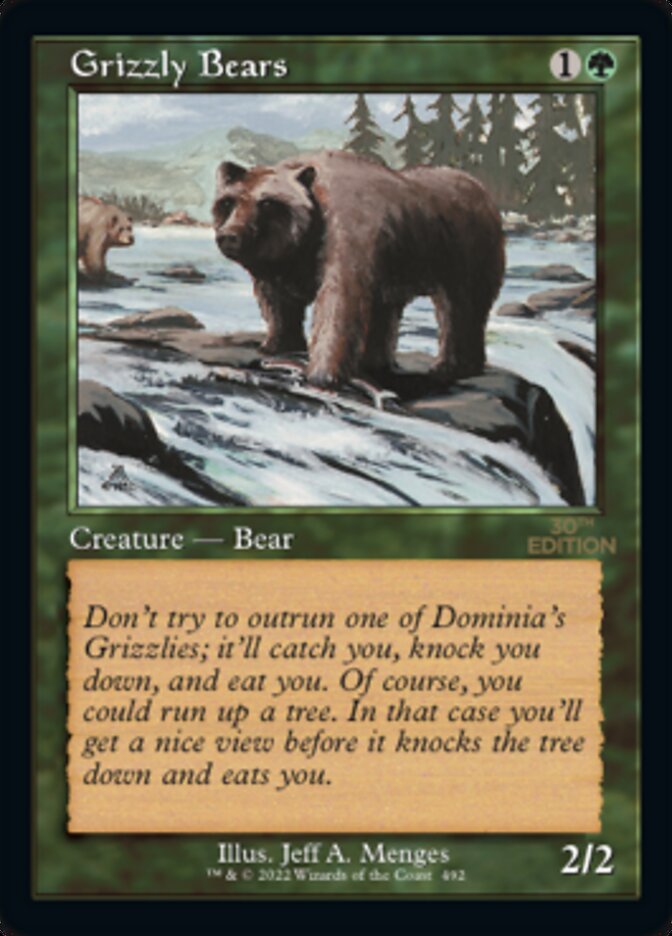
You cast Grizzly Bears during your main phase. The spell is on the stack. Who has priority now?
Keys A to D or click. No time limit.
After casting a spell, activating an ability or taking a special action, the same player receives priority again. Only once you pass is it your opponent's turn. That is why you can still do something "in response to your own spell", for example cast a second instant on top.
117.3cIf a player has priority when they cast a spell, activate an ability, or take a special action, that player receives priority afterward.
117.7If a player with priority casts a spell or activates an activated ability while another spell or ability is already on the stack, the new spell or ability has been cast or activated “in response to” the earlier spell or ability. The new spell or ability will resolve first. See rule 608, “Resolving Spells and Abilities.”
Cards involved

Priority
Statement
„Your opponent casts Lightning Bolt and passes. That makes the Bolt resolve immediately. "
Pick an answer — then move on.
An object only resolves once all players have passed in succession, with nothing happening in between. Your opponent passes, then you receive priority. If you pass too, the Bolt resolves. If you cast something instead, the round starts over: you receive priority again after casting, then your opponent, and only once both have passed in succession does the top object resolve, now your spell.
117.4If all players pass in succession (that is, if all players pass without taking any actions in between passing), the spell or ability on top of the stack resolves or, if the stack is empty, the phase or step ends.
117.3dIf a player has priority and chooses not to take any actions, that player passes. If any mana is in that player’s mana pool, they announce what mana is there. Then the next player in turn order receives priority.
Cards involved
Priority
It is your turn. Your opponent cast Lightning Bolt targeting you, both players passed, the Bolt resolves. Who receives priority afterwards?
Keys A to D or click. No time limit.
After a spell or ability (other than a mana ability) resolves, the active player always receives priority, no matter who cast the spell. Before that, the game checks state-based actions and puts triggered abilities on the stack. Then everyone can act again before the next object resolves.
117.3bThe active player receives priority after a spell or ability (other than a mana ability) resolves.
117.5Each time a player would get priority, the game first performs all applicable state-based actions as a single event (see rule 704, “State-Based Actions”), then repeats this process until no state-based actions are performed. Then triggered abilities are put on the stack (see rule 603, “Handling Triggered Abilities”). These steps repeat in order until no further state-based actions are performed and no abilities trigger. Then the player who would have received priority does so.
Cards involved
Priority
Lightning Bolt resolves and deals 3 damage to Grizzly Bears (2/2). When exactly does the creature die?
Keys A to D or click. No time limit.
State-based actions are checked every time a player would receive priority: creatures with lethal damage are destroyed, players at 0 life lose, Auras without a legal object go to the graveyard. This happens automatically, without the stack and without anyone announcing it. So there can be no "window" in which the Bears are still alive with 3 damage.
117.5Each time a player would get priority, the game first performs all applicable state-based actions as a single event (see rule 704, “State-Based Actions”), then repeats this process until no state-based actions are performed. Then triggered abilities are put on the stack (see rule 603, “Handling Triggered Abilities”). These steps repeat in order until no further state-based actions are performed and no abilities trigger. Then the player who would have received priority does so.
704.3Whenever a player would get priority (see rule 117, “Timing and Priority”), the game checks for any of the listed conditions for state-based actions, then performs all applicable state-based actions simultaneously as a single event. If any state-based actions are performed as a result of a check, the check is repeated; otherwise all triggered abilities that are waiting to be put on the stack are put on the stack, then the check is repeated. Once no more state-based actions have been performed as the result of a check and no triggered abilities are waiting to be put on the stack, the appropriate player gets priority. This process also occurs during the cleanup step (see rule 514), except that if no state-based actions are performed as the result of the step’s first check and no triggered abilities are waiting to be put on the stack, then no player gets priority and the step ends.
704.5gIf a creature has toughness greater than 0, it has damage marked on it, and the total damage marked on it is greater than or equal to its toughness, that creature has been dealt lethal damage and is destroyed. Regeneration can replace this event.
Priority
The stack is empty. You have priority and pass, and your opponent passes as well. What happens?
Keys A to D or click. No time limit.
When all players pass in succession, the top object on the stack resolves. If the stack is empty, the step or phase ends instead. That is how the game moves through the turn: each step in which priority is given ends only once everyone passes on an empty stack.
117.4If all players pass in succession (that is, if all players pass without taking any actions in between passing), the spell or ability on top of the stack resolves or, if the stack is empty, the phase or step ends.
405.5When all players pass in succession, the top (last-added) spell or ability on the stack resolves. If the stack is empty when all players pass, the current step or phase ends and the next begins.
Cards involved


Resolution
Your opponent casts Lightning Bolt targeting your Grizzly Bears (2/2). You respond with Giant Growth (+3/+3). Your opponent responds to that with Shock (2 damage) targeting the Bears. Everyone passes. What happens?
Keys A to D or click. No time limit.
The stack resolves from the top: Shock is on top and resolves first. 2 damage to a 2/2 is lethal, and state-based actions destroy the Bears before anyone receives priority again. Giant Growth and Lightning Bolt target a creature that is no longer on the battlefield and don't resolve. The lesson: whoever responds last has the last word.
405.5When all players pass in succession, the top (last-added) spell or ability on the stack resolves. If the stack is empty when all players pass, the current step or phase ends and the next begins.
117.5Each time a player would get priority, the game first performs all applicable state-based actions as a single event (see rule 704, “State-Based Actions”), then repeats this process until no state-based actions are performed. Then triggered abilities are put on the stack (see rule 603, “Handling Triggered Abilities”). These steps repeat in order until no further state-based actions are performed and no abilities trigger. Then the player who would have received priority does so.
704.5gIf a creature has toughness greater than 0, it has damage marked on it, and the total damage marked on it is greater than or equal to its toughness, that creature has been dealt lethal damage and is destroyed. Regeneration can replace this event.
608.2bIf the spell or ability specifies targets, it checks whether the targets are still legal. A target that’s no longer in the zone it was in when it was targeted is illegal. Other changes to the game state may cause a target to no longer be legal; for example, its characteristics may have changed or an effect may have changed the text of the spell. If the source of an ability has left the zone it was in, its last known information is used during this process. If all its targets, for every instance of the word “target,” are now illegal, the spell or ability doesn’t resolve. It’s removed from the stack and, if it’s a spell, put into its owner’s graveyard. Otherwise, the spell or ability will resolve normally. Illegal targets, if any, won’t be affected by parts of a resolving spell’s effect for which they’re illegal. Other parts of the effect for which those targets are not illegal may still affect them. If the spell or ability creates any continuous effects that affect game rules (see rule 613.11), those effects don’t apply to illegal targets. If part of the effect requires information about an illegal target, it fails to determine any such information. Any part of the effect that requires that information won’t happen.
Resolution
Statement
„When all players pass, the whole stack resolves at once, from top to bottom. "
Pick an answer — then move on.
Only the top object ever resolves. Afterwards the active player receives priority, and both players can act again before the next object gets its turn. That is why, after a response has resolved, you can still put another response on the original object.
405.5When all players pass in succession, the top (last-added) spell or ability on the stack resolves. If the stack is empty when all players pass, the current step or phase ends and the next begins.
117.3bThe active player receives priority after a spell or ability (other than a mana ability) resolves.
Cards involved
Resolution
Your opponent casts Lightning Bolt targeting your Grizzly Bears, you respond with Giant Growth. You have priority after casting and pass. What can your opponent do now?
Keys A to D or click. No time limit.
Every new response gives all players another chance to react. Your opponent can respond to Giant Growth, for instance with a second damage spell. If they pass, only Giant Growth resolves; then the active player receives priority and the fight over the Bolt continues. A pass only ever applies to the current moment, not to the whole stack.
117.3cIf a player has priority when they cast a spell, activate an ability, or take a special action, that player receives priority afterward.
117.4If all players pass in succession (that is, if all players pass without taking any actions in between passing), the spell or ability on top of the stack resolves or, if the stack is empty, the phase or step ends.
405.2The stack keeps track of the order that spells and/or abilities were added to it. Each time an object is put on the stack, it’s put on top of all objects already there.
Cards involved
Resolution
Grizzly Bears is on the stack as a spell and both players pass. What happens on resolution?
Keys A to D or click. No time limit.
A permanent spell (creature, artifact, enchantment, planeswalker, battle) resolves by entering the battlefield. Before that it is "a creature spell", not a creature: it can't block, can't be the target of "target creature" effects and doesn't trigger "enters" abilities. It only enters tapped if an effect says so.
608.3If the object that’s resolving is a permanent spell, its resolution may involve several steps. The instructions in rules 608.3a and b are always performed first. Then one of the steps in rule 608.3c–e is performed, if appropriate.
608.3aIf the object that’s resolving has no targets, it becomes a permanent and enters the battlefield under the control of the spell’s controller.
Resolution
Statement
„If several of my spells are on the stack, I may decide which one resolves first when they resolve. "
Pick an answer — then move on.
The order on the stack is fixed as soon as the objects are on it: each new object goes on top, and resolution runs from top to bottom. The only thing you decide is the order in which you put things on the stack. The same goes for abilities that trigger at the same time: you choose their order as you put them on the stack, and after that it is fixed.
405.2The stack keeps track of the order that spells and/or abilities were added to it. Each time an object is put on the stack, it’s put on top of all objects already there.
405.5When all players pass in succession, the top (last-added) spell or ability on the stack resolves. If the stack is empty when all players pass, the current step or phase ends and the next begins.
Cards involved

Countering
Grizzly Bears is on the battlefield. Your opponent wants to cast Counterspell ("Counter target spell.") on the Bears to "counter" them. Does that work?
Keys A to D or click. No time limit.
A spell is a card on the stack. Once it has resolved and is on the battlefield, it is a permanent, not a spell. Counterspell needs a spell on the stack as its target. If there is none, a legal target is missing and the spell can't even be cast. Against creatures on the battlefield you need destroy, exile or bounce.
701.6aTo counter a spell or ability means to cancel it, removing it from the stack. It doesn’t resolve and none of its effects occur. A countered spell is put into its owner’s graveyard.
112.1A spell is a card on the stack. As the first step of being cast (see rule 601, “Casting Spells”), the card becomes a spell and is moved to the top of the stack from the zone it was in, which is usually its owner’s hand. (See rule 405, “Stack.”) A spell remains on the stack as a spell until it resolves (see rule 608, “Resolving Spells and Abilities”), is countered (see rule 701.6), or otherwise leaves the stack. For more information, see section 6, “Spells, Abilities, and Effects.”
601.2cThe player announces their choice of an appropriate object or player for each target the spell requires. A spell may require some targets only if an alternative or additional cost (such as a kicker cost) or a particular mode was chosen for it; otherwise, the spell is cast as though it did not require those targets. Similarly, a spell may require alternative targets only if an alternative or additional cost was chosen for it. If the spell has a variable number of targets, the player announces how many targets they will choose before they announce those targets. In some cases, the number of targets will be defined by the spell’s text. Once the number of targets the spell has is determined, that number doesn’t change, even if the information used to determine the number of targets does. The same target can’t be chosen multiple times for any one instance of the word “target” on the spell. However, if the spell uses the word “target” in multiple places, the same object or player can be chosen once for each instance of the word “target” (as long as it fits the targeting criteria). If any effects say that an object or player must be chosen as a target, the player chooses targets so that they obey the maximum possible number of such effects without violating any rules or effects that say that an object or player can’t be chosen as a target. The chosen objects and/or players each become a target of that spell. (Any abilities that trigger when those objects and/or players become the target of a spell trigger at this point; they’ll wait to be put on the stack until the spell has finished being cast.)
Cards involved

Countering
Your opponent casts Lightning Bolt targeting you. You respond with Counterspell targeting the Bolt. Your opponent responds with Dispel ("Counter target instant spell.") targeting your Counterspell. Everyone passes. Result?
Keys A to D or click. No time limit.
Top to bottom: Dispel is on top, resolves first and counters Counterspell. A countered spell is removed from the stack and has no effect. Lightning Bolt remains and resolves as normal. In a "counter war" the player with the last counter wins.
405.5When all players pass in succession, the top (last-added) spell or ability on the stack resolves. If the stack is empty when all players pass, the current step or phase ends and the next begins.
701.6aTo counter a spell or ability means to cancel it, removing it from the stack. It doesn’t resolve and none of its effects occur. A countered spell is put into its owner’s graveyard.
Cards involved
Countering
Statement
„If my spell is countered, I get back the mana I paid for it. "
Pick an answer — then move on.
Costs are paid as soon as the spell is cast, and they don't come back. That applies to mana as well as additional costs like sacrificing or paying life. A countered spell goes to its owner's graveyard and the investment is gone. That is exactly what makes countering so strong.
701.6bThe player who cast a countered spell or activated a countered ability doesn’t get a “refund” of any costs that were paid.
Cards involved


Countering
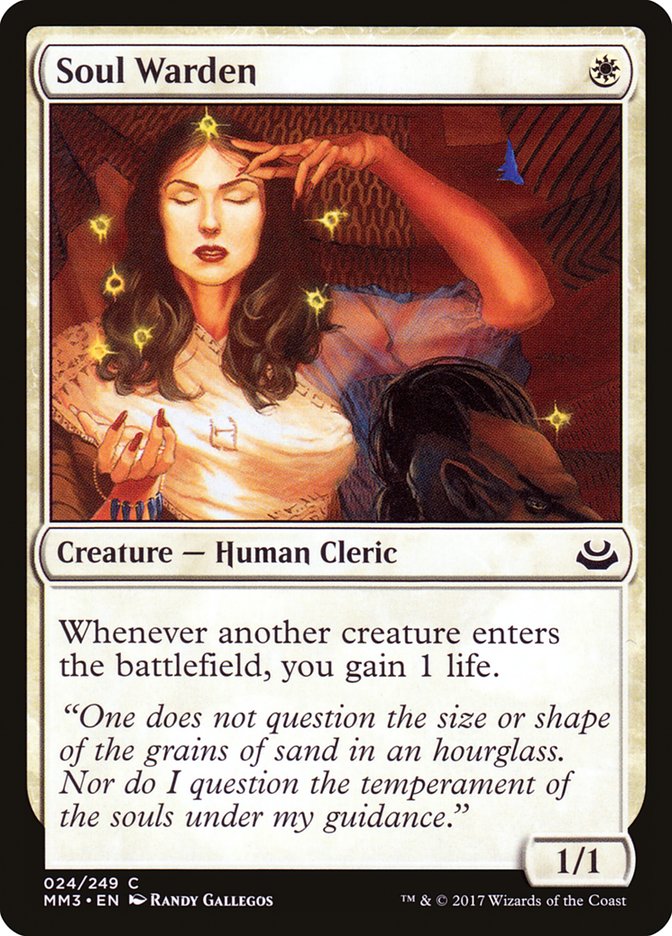
Your opponent controls Soul Warden, whose trigger ("you gain 1 life") is on the stack. You hold Negate ("Counter target noncreature spell.") and Stifle ("Counter target activated or triggered ability."). Which can counter the trigger?
Keys A to D or click. No time limit.
Activated and triggered abilities sit on the stack like spells, but they are not spells. Anything that counters "target spell" passes them by. Only effects that explicitly counter abilities (Stifle and its relatives) catch them. Static abilities never use the stack and are out of reach for both.
113.9Activated and triggered abilities on the stack aren’t spells, and therefore can’t be countered by anything that counters only spells. Activated and triggered abilities on the stack can be countered by effects that specifically counter abilities. Static abilities don’t use the stack and thus can’t be countered at all.
701.6aTo counter a spell or ability means to cancel it, removing it from the stack. It doesn’t resolve and none of its effects occur. A countered spell is put into its owner’s graveyard.
Cards involved
Countering
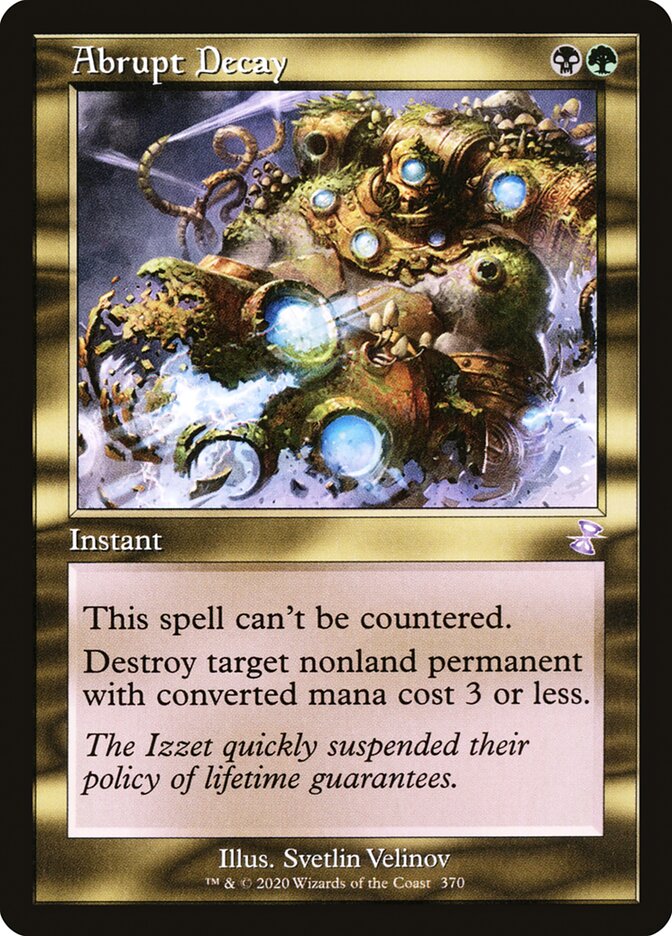
Your opponent casts Abrupt Decay ("This spell can't be countered. Destroy target nonland permanent …"). You respond with Counterspell targeting Abrupt Decay. What happens?
Keys A to D or click. No time limit.
"Can't be countered" doesn't prevent targeting, only the result. Abrupt Decay is a spell on the stack, so it is a legal target. Counterspell resolves, tries to counter, and Abrupt Decay's ability (it functions on the stack) doesn't allow it. The mana for Counterspell is gone regardless, which is why you only cast it if you haven't read the card.
113.6gAn object’s ability that states it can’t be countered or can’t be copied functions on the stack.
701.6aTo counter a spell or ability means to cancel it, removing it from the stack. It doesn’t resolve and none of its effects occur. A countered spell is put into its owner’s graveyard.
Cards involved

Fizzling
Your opponent casts Lightning Bolt targeting your Grizzly Bears. You respond with Unsummon ("Return target creature to its owner's hand.") targeting the Bears. Everyone passes. What happens to the Bolt?
Keys A to D or click. No time limit.
On resolution a spell checks whether its targets are still legal. A target that has changed zones is illegal. If all targets are illegal, the spell doesn't resolve ("fizzles") and goes to the graveyard. Targets are never re-chosen afterwards. That Bolt could hit "any target" doesn't matter: the Bears were chosen.
608.2bIf the spell or ability specifies targets, it checks whether the targets are still legal. A target that’s no longer in the zone it was in when it was targeted is illegal. Other changes to the game state may cause a target to no longer be legal; for example, its characteristics may have changed or an effect may have changed the text of the spell. If the source of an ability has left the zone it was in, its last known information is used during this process. If all its targets, for every instance of the word “target,” are now illegal, the spell or ability doesn’t resolve. It’s removed from the stack and, if it’s a spell, put into its owner’s graveyard. Otherwise, the spell or ability will resolve normally. Illegal targets, if any, won’t be affected by parts of a resolving spell’s effect for which they’re illegal. Other parts of the effect for which those targets are not illegal may still affect them. If the spell or ability creates any continuous effects that affect game rules (see rule 613.11), those effects don’t apply to illegal targets. If part of the effect requires information about an illegal target, it fails to determine any such information. Any part of the effect that requires that information won’t happen.
701.6aTo counter a spell or ability means to cancel it, removing it from the stack. It doesn’t resolve and none of its effects occur. A countered spell is put into its owner’s graveyard.
Cards involved

Fizzling
Your opponent casts Electrolyze ("deals 2 damage divided as you choose among one or two targets. Draw a card.") with 1 damage each to your Grizzly Bears and to you. In response you cast Unsummon targeting the Bears. What happens on resolution?
Keys A to D or click. No time limit.
A spell only fizzles if ALL of its targets are illegal. As long as at least one target is still legal, it resolves normally, and only the parts concerning an illegal target drop out. The damage assigned to the Bears is lost; it doesn't move to you. Drawing a card has no target at all and happens regardless.
608.2bIf the spell or ability specifies targets, it checks whether the targets are still legal. A target that’s no longer in the zone it was in when it was targeted is illegal. Other changes to the game state may cause a target to no longer be legal; for example, its characteristics may have changed or an effect may have changed the text of the spell. If the source of an ability has left the zone it was in, its last known information is used during this process. If all its targets, for every instance of the word “target,” are now illegal, the spell or ability doesn’t resolve. It’s removed from the stack and, if it’s a spell, put into its owner’s graveyard. Otherwise, the spell or ability will resolve normally. Illegal targets, if any, won’t be affected by parts of a resolving spell’s effect for which they’re illegal. Other parts of the effect for which those targets are not illegal may still affect them. If the spell or ability creates any continuous effects that affect game rules (see rule 613.11), those effects don’t apply to illegal targets. If part of the effect requires information about an illegal target, it fails to determine any such information. Any part of the effect that requires that information won’t happen.
Fizzling
Statement
„A spell that fizzles because its target is gone counts as "countered". Abilities like "Whenever a spell is countered" therefore trigger. "
Pick an answer — then move on.
Fizzling and countering are two different things. A fizzled spell "doesn't resolve" and goes to the graveyard, but it was not countered. Anything that reacts to "countered" stays silent. Conversely, a spell with "can't be countered" is not protected from fizzling either.
608.2bIf the spell or ability specifies targets, it checks whether the targets are still legal. A target that’s no longer in the zone it was in when it was targeted is illegal. Other changes to the game state may cause a target to no longer be legal; for example, its characteristics may have changed or an effect may have changed the text of the spell. If the source of an ability has left the zone it was in, its last known information is used during this process. If all its targets, for every instance of the word “target,” are now illegal, the spell or ability doesn’t resolve. It’s removed from the stack and, if it’s a spell, put into its owner’s graveyard. Otherwise, the spell or ability will resolve normally. Illegal targets, if any, won’t be affected by parts of a resolving spell’s effect for which they’re illegal. Other parts of the effect for which those targets are not illegal may still affect them. If the spell or ability creates any continuous effects that affect game rules (see rule 613.11), those effects don’t apply to illegal targets. If part of the effect requires information about an illegal target, it fails to determine any such information. Any part of the effect that requires that information won’t happen.
701.6aTo counter a spell or ability means to cancel it, removing it from the stack. It doesn’t resolve and none of its effects occur. A countered spell is put into its owner’s graveyard.
Cards involved


Fizzling
Your opponent casts Doom Blade ("Destroy target nonblack creature.") targeting your Grizzly Bears. You respond with Blossoming Defense: the Bears get +2/+2 and hexproof until end of turn. What happens?
Keys A to D or click. No time limit.
Targets are checked on casting AND on resolution. Hexproof means the creature can't be the target of spells or abilities an opponent controls. When Doom Blade resolves, the target is therefore illegal and the spell fizzles. The +2/+2 is just a bonus here: Doom Blade destroys, and toughness doesn't help against that.
702.11b“Hexproof” on a permanent means “This permanent can’t be the target of spells or abilities your opponents control.”
608.2bIf the spell or ability specifies targets, it checks whether the targets are still legal. A target that’s no longer in the zone it was in when it was targeted is illegal. Other changes to the game state may cause a target to no longer be legal; for example, its characteristics may have changed or an effect may have changed the text of the spell. If the source of an ability has left the zone it was in, its last known information is used during this process. If all its targets, for every instance of the word “target,” are now illegal, the spell or ability doesn’t resolve. It’s removed from the stack and, if it’s a spell, put into its owner’s graveyard. Otherwise, the spell or ability will resolve normally. Illegal targets, if any, won’t be affected by parts of a resolving spell’s effect for which they’re illegal. Other parts of the effect for which those targets are not illegal may still affect them. If the spell or ability creates any continuous effects that affect game rules (see rule 613.11), those effects don’t apply to illegal targets. If part of the effect requires information about an illegal target, it fails to determine any such information. Any part of the effect that requires that information won’t happen.
Cards involved

Fizzling
Your opponent casts Lightning Bolt targeting your Grizzly Bears. You respond with Cloudshift ("Exile target creature you control, then return that card to the battlefield under your control."). After Cloudshift resolves, the Bears are back on the battlefield. Does the Bolt hit?
Keys A to D or click. No time limit.
When a card changes zones, it becomes a new object with no memory of its previous existence, even if it comes right back. Lightning Bolt targeted the "old" Bears. Those went to exile, the target became illegal, and the fact that an identical-looking object is on the battlefield changes nothing. That is why flicker effects work as protection.
400.7An object that moves from one zone to another becomes a new object with no memory of, or relation to, its previous existence. This rule has the following exceptions.
608.2bIf the spell or ability specifies targets, it checks whether the targets are still legal. A target that’s no longer in the zone it was in when it was targeted is illegal. Other changes to the game state may cause a target to no longer be legal; for example, its characteristics may have changed or an effect may have changed the text of the spell. If the source of an ability has left the zone it was in, its last known information is used during this process. If all its targets, for every instance of the word “target,” are now illegal, the spell or ability doesn’t resolve. It’s removed from the stack and, if it’s a spell, put into its owner’s graveyard. Otherwise, the spell or ability will resolve normally. Illegal targets, if any, won’t be affected by parts of a resolving spell’s effect for which they’re illegal. Other parts of the effect for which those targets are not illegal may still affect them. If the spell or ability creates any continuous effects that affect game rules (see rule 613.11), those effects don’t apply to illegal targets. If part of the effect requires information about an illegal target, it fails to determine any such information. Any part of the effect that requires that information won’t happen.