Level 1 · Basics
Cards involved


Timing
Your opponent attacks with Centaur Courser (3/3). You hold Lightning Bolt (instant,  ). May you cast it right now to kill the attacker?
Keys A to D or click. No time limit.
Instants may always be cast when you have priority, including your opponent's turn and every combat step. An empty stack only matters for sorceries. After attackers are declared, the active player receives priority; once they pass, it's your turn. 3 damage kills the 3/3 before it deals combat damage.
117.1aA player may cast an instant spell any time they have priority. A player may cast a noninstant spell during their main phase any time they have priority and the stack is empty.
304.1A player who has priority may cast an instant card from their hand. Casting an instant as a spell uses the stack. (See rule 601, “Casting Spells.”)
117.3aThe active player receives priority at the beginning of most steps and phases, after any turn-based actions (such as drawing a card during the draw step; see rule 703) have been dealt with and abilities that trigger at the beginning of that phase or step have been put on the stack. No player receives priority during the untap step. Players usually don’t get priority during the cleanup step (see rule 514.3).
Timing
Mark every part of your own turn in which you may cast a sorcery (stack empty).
Multiple choice: mark every matching part of the turn, then check.
Sorceries only during your main phase 1 or 2, and only while the stack is empty. Nobody receives priority during the untap step, and normally nobody does during the cleanup step either.
307.1A player who has priority may cast a sorcery card from their hand during a main phase of their turn when the stack is empty. Casting a sorcery as a spell uses the stack. (See rule 601, “Casting Spells.”)
505.1There are two main phases in a turn. In each turn, the first main phase (also known as the precombat main phase) and the second main phase (also known as the postcombat main phase) are separated by the combat phase (see rule 506, “Combat Phase”). The precombat and postcombat main phases are individually and collectively known as the main phase.
502.4No player receives priority during the untap step, so no spells can be cast or resolve and no abilities can be activated or resolve. Any ability that triggers during this step will be held until the next time a player would receive priority, which is usually during the upkeep step. (See rule 503, “Upkeep Step.”)
514.3Normally, no player receives priority during the cleanup step, so no spells can be cast and no abilities can be activated. However, this rule is subject to the following exception:
Cards involved


Timing
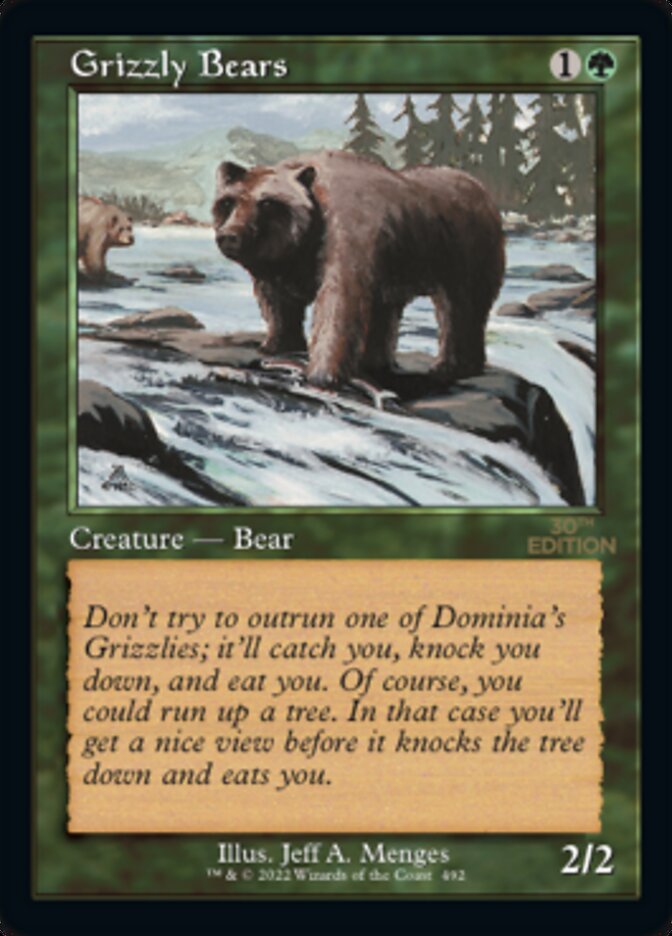
Your opponent casts Lightning Strike targeting your Grizzly Bears (2/2). You hold Giant Growth (+3/+3). Can you still save the Bears?
Keys A to D or click. No time limit.
After casting, your opponent receives priority first; once they pass, it's yours. Giant Growth goes on the stack above Lightning Strike and resolves first: the Bears are 5/5, and 3 damage is no longer enough. Only when both players pass in succession does the top object resolve.
117.1aA player may cast an instant spell any time they have priority. A player may cast a noninstant spell during their main phase any time they have priority and the stack is empty.
117.3cIf a player has priority when they cast a spell, activate an ability, or take a special action, that player receives priority afterward.
117.4If all players pass in succession (that is, if all players pass without taking any actions in between passing), the spell or ability on top of the stack resolves or, if the stack is empty, the phase or step ends.
Timing
It is your opponent's turn. In which parts of their turn do you receive priority and can cast an instant?
Multiple choice: mark every matching part of the turn, then check.
In every step and phase where players receive priority, the active player gets it first. Once they pass, you receive priority. A step only ends once all players have passed in succession, so your opponent cannot "skip" a step without giving you priority. Exceptions: nobody receives priority during the untap step, and normally nobody does during cleanup.
117.1aA player may cast an instant spell any time they have priority. A player may cast a noninstant spell during their main phase any time they have priority and the stack is empty.
117.3aThe active player receives priority at the beginning of most steps and phases, after any turn-based actions (such as drawing a card during the draw step; see rule 703) have been dealt with and abilities that trigger at the beginning of that phase or step have been put on the stack. No player receives priority during the untap step. Players usually don’t get priority during the cleanup step (see rule 514.3).
117.3dIf a player has priority and chooses not to take any actions, that player passes. If any mana is in that player’s mana pool, they announce what mana is there. Then the next player in turn order receives priority.
117.4If all players pass in succession (that is, if all players pass without taking any actions in between passing), the spell or ability on top of the stack resolves or, if the stack is empty, the phase or step ends.
502.4No player receives priority during the untap step, so no spells can be cast or resolve and no abilities can be activated or resolve. Any ability that triggers during this step will be held until the next time a player would receive priority, which is usually during the upkeep step. (See rule 503, “Upkeep Step.”)
514.3Normally, no player receives priority during the cleanup step, so no spells can be cast and no abilities can be activated. However, this rule is subject to the following exception:
Cards involved

Ability types
 : Add
 .
What kind of ability is the highlighted line?
Keys A to D or click. No time limit.
An activated ability in the "[cost]: [effect]" pattern. Because it could add mana, has no target and isn't a loyalty ability, it is a mana ability and resolves immediately. You can even activate it in the middle of paying for a spell.
602.1Activated abilities have a cost and an effect. They are written as “[Cost]: [Effect.] [Activation instructions (if any).]”
605.1aAn activated ability is a mana ability if it meets all of the following criteria: it doesn’t require a target (see rule 115.6), it could add mana to a player’s mana pool when it resolves, it’s not a loyalty ability (see rule 606, “Loyalty Abilities”), and its cost and effect don’t move any card to or from a library. Do not take into account replacement effects that may apply, other than self-replacement effects, when evaluating these criteria.
605.3aA player may activate an activated mana ability whenever they have priority, whenever they are casting a spell or activating an ability that requires a mana payment, or whenever a rule or effect asks for a mana payment, even if it’s in the middle of casting or resolving a spell or activating or resolving an ability.
Cards involved

Ability types
What kind of ability is the highlighted line?
Keys A to D or click. No time limit.
The trigger words "when", "whenever" and "at" mark triggered abilities. It triggers automatically as soon as the event happens and is put on the stack the next time a player would receive priority.
603.1Triggered abilities have a trigger condition and an effect. They are written as “[When/Whenever/At] [trigger condition or event], [effect]. [Instructions (if any).]”
603.3Once an ability has triggered, its controller puts it on the stack as an object that’s not a card the next time a player would receive priority. See rule 117, “Timing and Priority.” The ability becomes the topmost object on the stack. It has the text of the ability that created it, and no other characteristics. It remains on the stack until it’s countered, it resolves, a rule causes it to be removed from the stack, or an effect moves it elsewhere.
Cards involved
Ability types
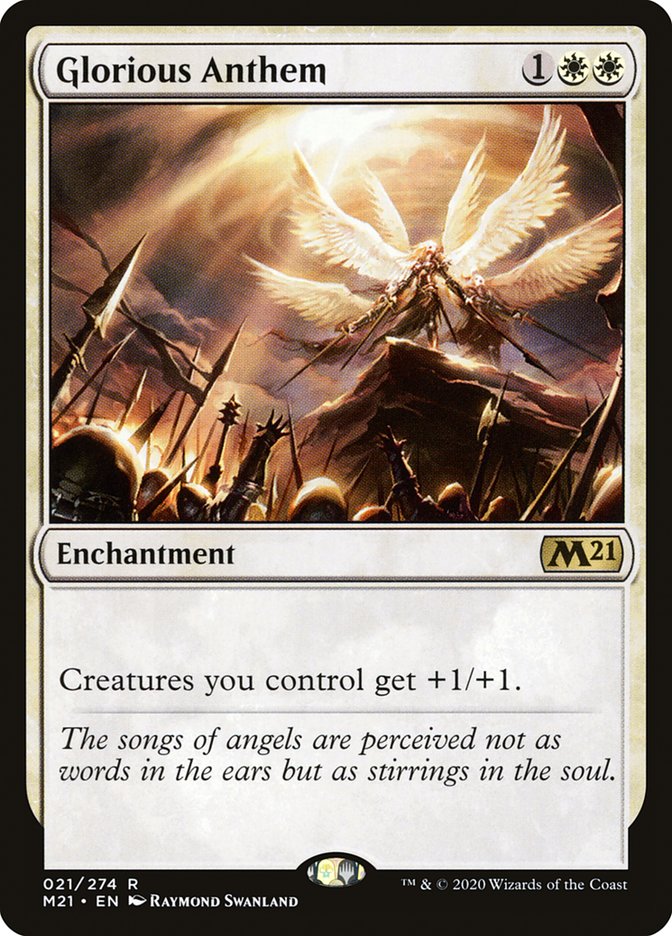
What kind of ability is the highlighted line?
Keys A to D or click. No time limit.
No "when", no colon. The ability is simply true as long as Glorious Anthem is on the battlefield. Static abilities generate continuous effects and never use the stack.
Cards involved

Ability types
: This creature deals 1 damage to any target.
What kind of ability is the highlighted line?
Keys A to D or click. No time limit.
"[Cost]: [effect]" makes it activated. It has a target and doesn't add mana, so it isn't a mana ability. Activating means putting it on the stack and paying the cost; your opponent can respond.
602.1Activated abilities have a cost and an effect. They are written as “[Cost]: [Effect.] [Activation instructions (if any).]”
602.2To activate an ability is to put it onto the stack and pay its costs, so that it will eventually resolve and have its effect. Only an object’s controller (or its owner, if it doesn’t have a controller) can activate its activated ability unless the object specifically says otherwise. Activating an ability follows the steps listed below, in order. If, at any point during the activation of an ability, a player is unable to comply with any of those steps, the activation is illegal; the game returns to the moment before that ability started to be activated (see rule 733, “Handling Illegal Actions”). Announcements and payments can’t be altered after they’ve been made.
605.1aAn activated ability is a mana ability if it meets all of the following criteria: it doesn’t require a target (see rule 115.6), it could add mana to a player’s mana pool when it resolves, it’s not a loyalty ability (see rule 606, “Loyalty Abilities”), and its cost and effect don’t move any card to or from a library. Do not take into account replacement effects that may apply, other than self-replacement effects, when evaluating these criteria.
Cards involved

Ability types
Mind Stone has two abilities: ": Add  ." and "
 , , Sacrifice this artifact: Draw a card." Which of them uses the stack?
Keys A to D or click. No time limit.
Mana abilities don't use the stack and can't be responded to. The draw ability doesn't add mana, so it is a regular activated ability: it goes on the stack and can be responded to, for example with a spell that destroys Mind Stone (the ability still resolves — a topic for level 3).
605.1aAn activated ability is a mana ability if it meets all of the following criteria: it doesn’t require a target (see rule 115.6), it could add mana to a player’s mana pool when it resolves, it’s not a loyalty ability (see rule 606, “Loyalty Abilities”), and its cost and effect don’t move any card to or from a library. Do not take into account replacement effects that may apply, other than self-replacement effects, when evaluating these criteria.
605.3bAn activated mana ability doesn’t go on the stack, so it can’t be targeted, countered, or otherwise responded to. Rather, it resolves immediately after it is activated. (See rule 405.6c.)
602.2To activate an ability is to put it onto the stack and pay its costs, so that it will eventually resolve and have its effect. Only an object’s controller (or its owner, if it doesn’t have a controller) can activate its activated ability unless the object specifically says otherwise. Activating an ability follows the steps listed below, in order. If, at any point during the activation of an ability, a player is unable to comply with any of those steps, the activation is illegal; the game returns to the moment before that ability started to be activated (see rule 733, “Handling Illegal Actions”). Announcements and payments can’t be altered after they’ve been made.
Cards involved
Ability types
Statement
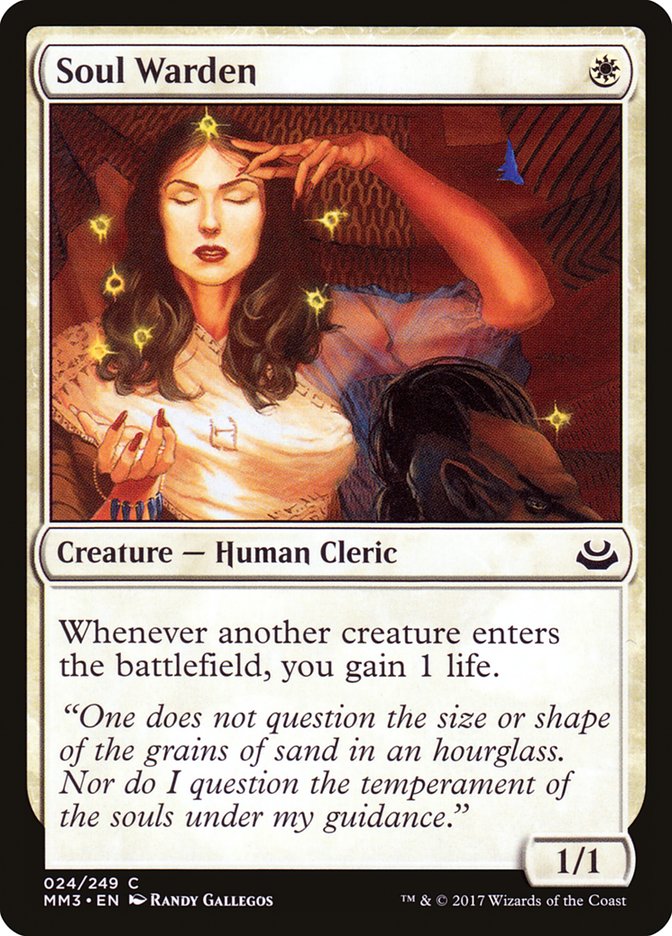
„A triggered ability like Soul Warden's has to be activated by me, otherwise nothing happens. "
Pick an answer — then move on.
Triggered abilities trigger automatically as soon as the event happens. The player who controlled the source when it triggered (not necessarily its owner) puts it on the stack the next time a player would receive priority. Only abilities with a cost and a colon are activated.
603.2Whenever a game event or game state matches a triggered ability’s trigger event, that ability automatically triggers. The ability doesn’t do anything at this point.
603.3Once an ability has triggered, its controller puts it on the stack as an object that’s not a card the next time a player would receive priority. See rule 117, “Timing and Priority.” The ability becomes the topmost object on the stack. It has the text of the ability that created it, and no other characteristics. It remains on the stack until it’s countered, it resolves, a rule causes it to be removed from the stack, or an effect moves it elsewhere.
603.3aA triggered ability is controlled by the player who controlled its source at the time it triggered, unless it’s a delayed triggered ability. To determine the controller of a delayed triggered ability, see rules 603.7d–f.
Turn structure
In which order do the five phases of a turn happen?
Keys A to D or click. No time limit.
Five phases in a fixed order; each one takes place every turn, even if nothing happens. The beginning, combat and ending phases are divided into steps.
500.1A turn consists of five phases, in this order: beginning, precombat main, combat, postcombat main, and ending. Each of these phases takes place every turn, even if nothing happens during the phase. The beginning, combat, and ending phases are further broken down into steps, which proceed in order.
Turn structure
Which steps make up the beginning phase, in this order?
Keys A to D or click. No time limit.
Untap (no priority), then upkeep (where "at the beginning of your upkeep" abilities trigger), then draw.
501.1The beginning phase consists of three steps, in this order: untap, upkeep, and draw.
502.4No player receives priority during the untap step, so no spells can be cast or resolve and no abilities can be activated or resolve. Any ability that triggers during this step will be held until the next time a player would receive priority, which is usually during the upkeep step. (See rule 503, “Upkeep Step.”)
Turn structure
Statement
„During the untap step I can quickly cast an instant before my opponent untaps their creatures. "
Pick an answer — then move on.
No player receives priority during the untap step. No spells can be cast and no abilities can be activated. If you want to act "during the untap phase", you do it in the end step of the previous turn.
502.4No player receives priority during the untap step, so no spells can be cast or resolve and no abilities can be activated or resolve. Any ability that triggers during this step will be held until the next time a player would receive priority, which is usually during the upkeep step. (See rule 503, “Upkeep Step.”)
Turn structure
Two-player game. In their first turn, the player who goes first skips …
Keys A to D or click. No time limit.
The starting player skips the draw step of their first turn. This balances the advantage of going first and applies to two-player games and team formats like Two-Headed Giant, but not to free-for-all multiplayer.
Turn structure
Which five steps does the combat phase have, in this order?
Keys A to D or click. No time limit.
Five steps in a fixed order. The declare blockers and combat damage steps are skipped if no creature attacks. Players receive priority in every step, which is why you can still act between attackers and blockers.
506.1The combat phase has five steps, which proceed in order: beginning of combat, declare attackers, declare blockers, combat damage, and end of combat. The declare blockers and combat damage steps are skipped if no creatures are declared as attackers or put onto the battlefield attacking (see rule 508.8). There are two combat damage steps if any attacking or blocking creature has first strike (see rule 702.7) or double strike (see rule 702.4).
Turn structure
Which steps make up the ending phase, and what happens during the cleanup step?
Keys A to D or click. No time limit.
Two steps, in this order. During the end step, "at the beginning of the end step" abilities trigger and players receive priority. During cleanup the rest happens without the stack: discard down to 7, damage is removed, turn effects end. Normally nobody receives priority here.
512.1The ending phase consists of two steps: end and cleanup.
513.1The end step has no turn-based actions. Once it begins, the active player gets priority. (See rule 117, “Timing and Priority.”)
514.1First, if the active player’s hand contains more cards than their maximum hand size (normally seven), they discard enough cards to reduce their hand size to that number. This turn-based action doesn’t use the stack.
514.2Second, the following actions happen simultaneously: all damage marked on permanents (including phased-out permanents) is removed and all “until end of turn” and “this turn” effects end. This turn-based action doesn’t use the stack.
Cards involved
Card types
During your opponent's end step you have priority and two untapped lands. May you cast Grizzly Bears now?
Keys A to D or click. No time limit.
Creatures follow the same timing as sorceries: your own main phase (1 or 2), priority, empty stack. The only exception is the keyword flash.
Card types
Which card types may you cast only during your main phase while the stack is empty?
Keys A to D or click. No time limit.
The rule is written generally: instants any time you have priority, every other spell only during your own main phase while the stack is empty. That covers creatures, sorceries, enchantments, artifacts, planeswalkers and battles.
117.1aA player may cast an instant spell any time they have priority. A player may cast a noninstant spell during their main phase any time they have priority and the stack is empty.
307.1A player who has priority may cast a sorcery card from their hand during a main phase of their turn when the stack is empty. Casting a sorcery as a spell uses the stack. (See rule 601, “Casting Spells.”)
Card types
You play a land. Which of these is true?
Keys A to D or click. No time limit.
Playing a land is a special action: not a spell, no stack, cannot be responded to. Normally once per turn, during your own main phase while the stack is empty and you have priority.
305.1A player who has priority may play a land card from their hand during a main phase of their turn when the stack is empty. Playing a land is a special action; it doesn’t use the stack (see rule 116). Rather, the player simply puts the land onto the battlefield. Since the land doesn’t go on the stack, it is never a spell, and players can’t respond to it with instants or activated abilities.
305.2A player can normally play one land during their turn; however, continuous effects may increase this number.
116.2aPlaying a land is a special action. To play a land, a player puts that land onto the battlefield from the zone it was in (usually that player’s hand). By default, a player can take this action only once during each of their turns. A player can take this action any time they have priority and the stack is empty during a main phase of their turn. See rule 305, “Lands.”
Cards involved

Card types
Statement
„Pacifism is a spell with a target. If the creature I cast it on dies in response, Pacifism goes to the graveyard when it would resolve. "
Pick an answer — then move on.
An Aura spell always has a target when cast, defined by its enchant ability. On resolution the target is checked. If it is gone, the only target is illegal, the spell doesn't resolve and goes to the graveyard.
303.4aAn Aura spell requires a target, which is defined by its enchant ability.
608.2bIf the spell or ability specifies targets, it checks whether the targets are still legal. A target that’s no longer in the zone it was in when it was targeted is illegal. Other changes to the game state may cause a target to no longer be legal; for example, its characteristics may have changed or an effect may have changed the text of the spell. If the source of an ability has left the zone it was in, its last known information is used during this process. If all its targets, for every instance of the word “target,” are now illegal, the spell or ability doesn’t resolve. It’s removed from the stack and, if it’s a spell, put into its owner’s graveyard. Otherwise, the spell or ability will resolve normally. Illegal targets, if any, won’t be affected by parts of a resolving spell’s effect for which they’re illegal. Other parts of the effect for which those targets are not illegal may still affect them. If the spell or ability creates any continuous effects that affect game rules (see rule 613.11), those effects don’t apply to illegal targets. If part of the effect requires information about an illegal target, it fails to determine any such information. Any part of the effect that requires that information won’t happen.